Explore the science
Free drone simulations for students
Explore drone science with classroom labs, worked examples and real previews. Free accounts open the interactive activities.
What is a drone?
Drones, their types and their parts
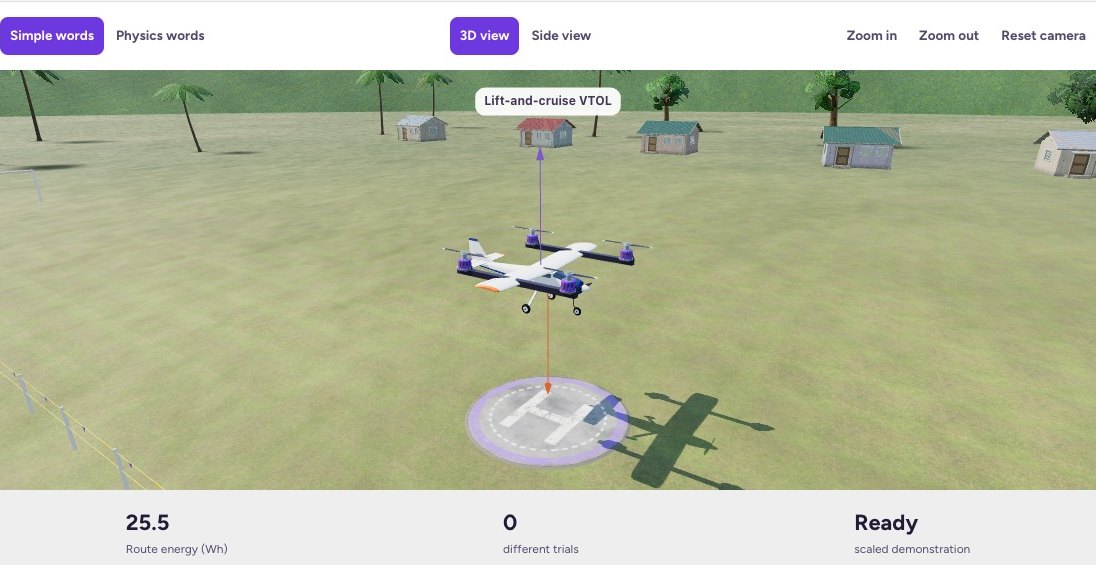
Four aircraft, one mission
Compare energy and landing needs
Grades 3–6 · Grades 7–8 · Grades 9–11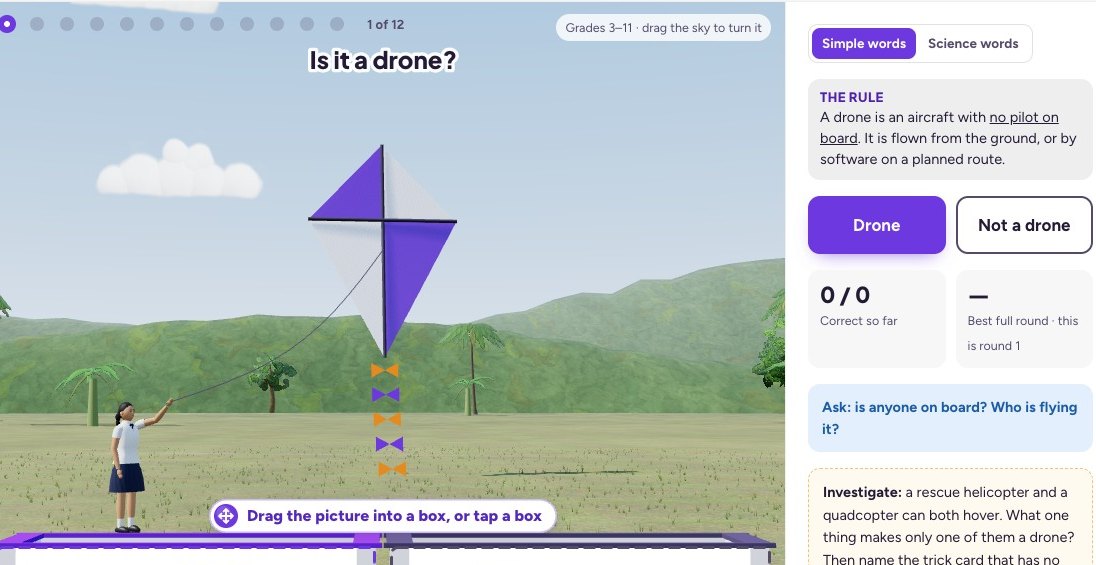
Is it a drone?
Sort 12 flying things
Grades 3–6 · Grades 7–8 · Grades 9–11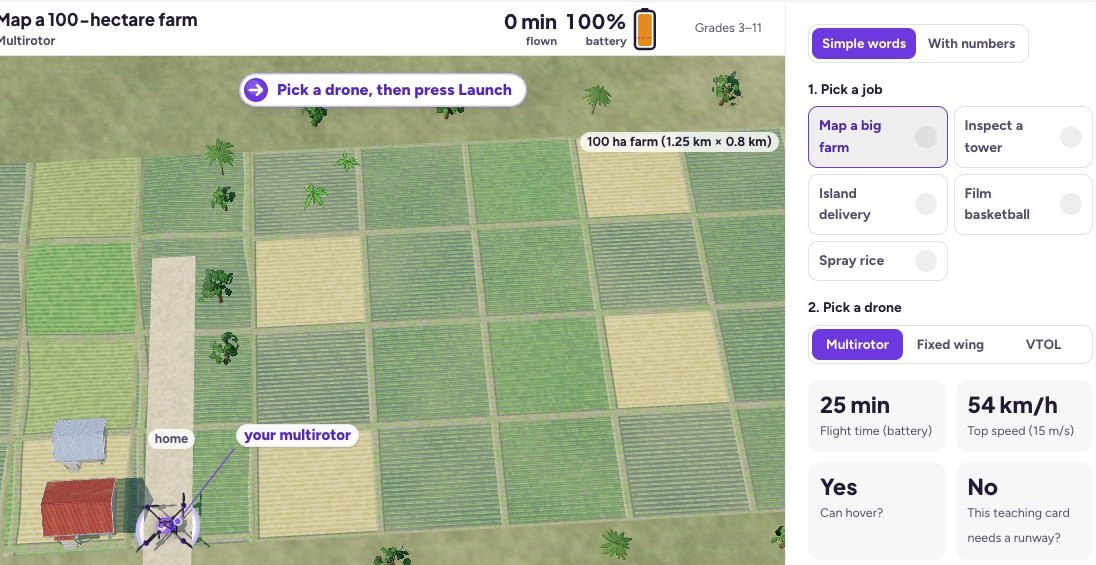
Pick the right drone
Multirotor, fixed wing or VTOL?
Grades 3–6 · Grades 7–8 · Grades 9–11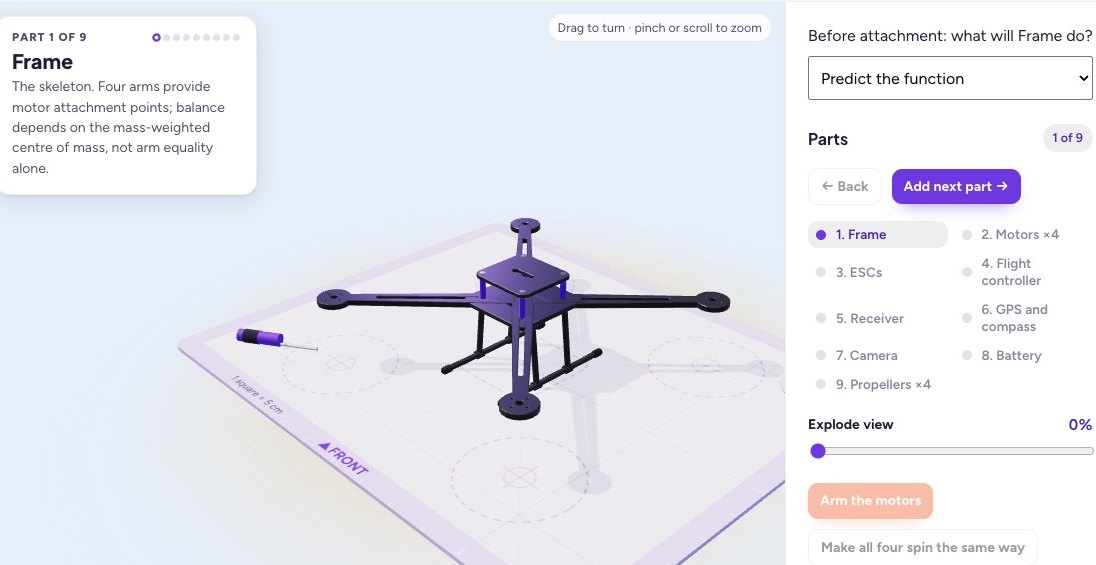
Build a quadcopter
Parts of a drone · 3D
Grades 3–6 · Grades 7–8 · Grades 9–11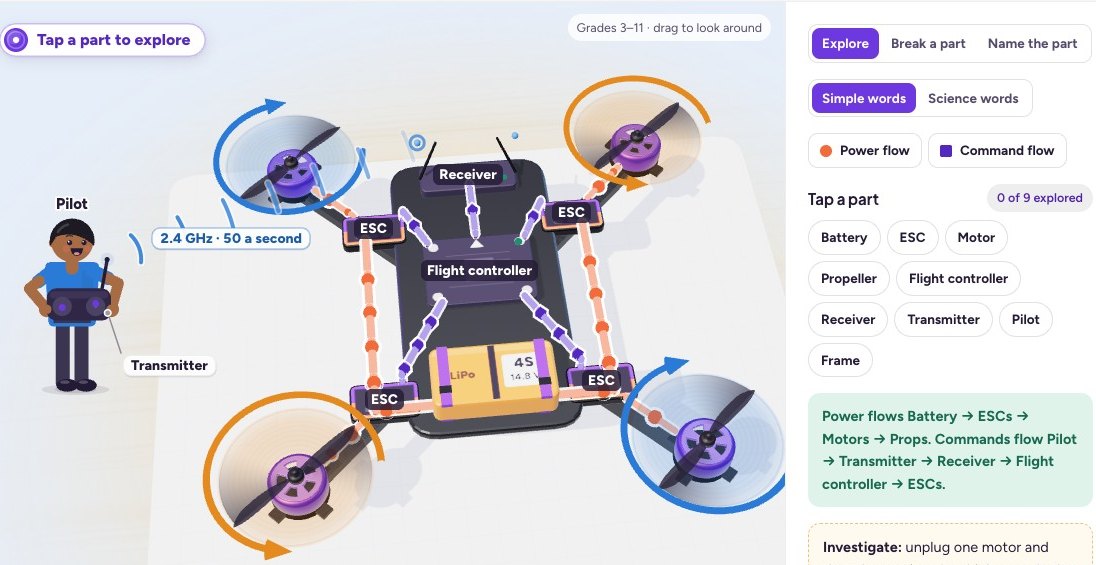
A drone is a system
Power one way, commands the other
Grades 3–6 · Grades 7–8 · Grades 9–11How drones fly
Thrust, weight, drag and lift
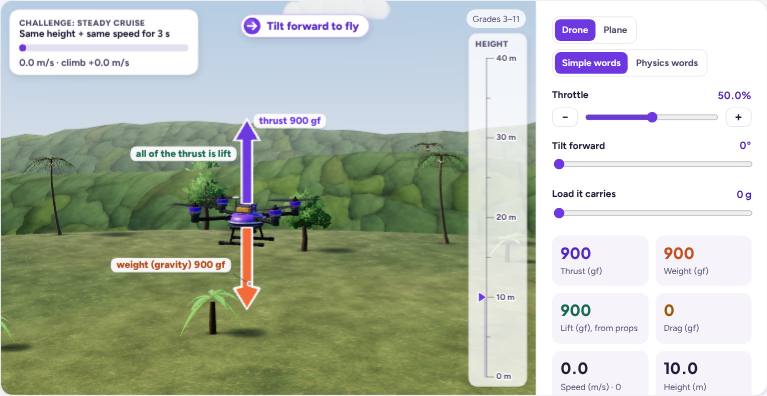
The four forces
Thrust, weight, drag and lift
Grades 3–6 · Grades 7–8 · Grades 9–11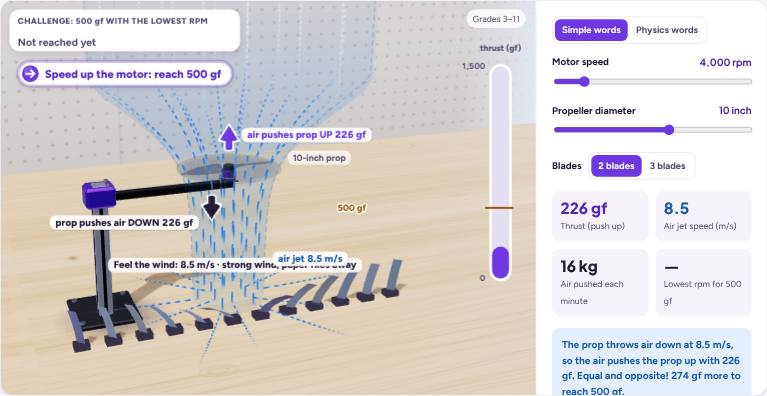
Where thrust comes from
Push air down, get pushed up
Grades 3–6 · Grades 7–8 · Grades 9–11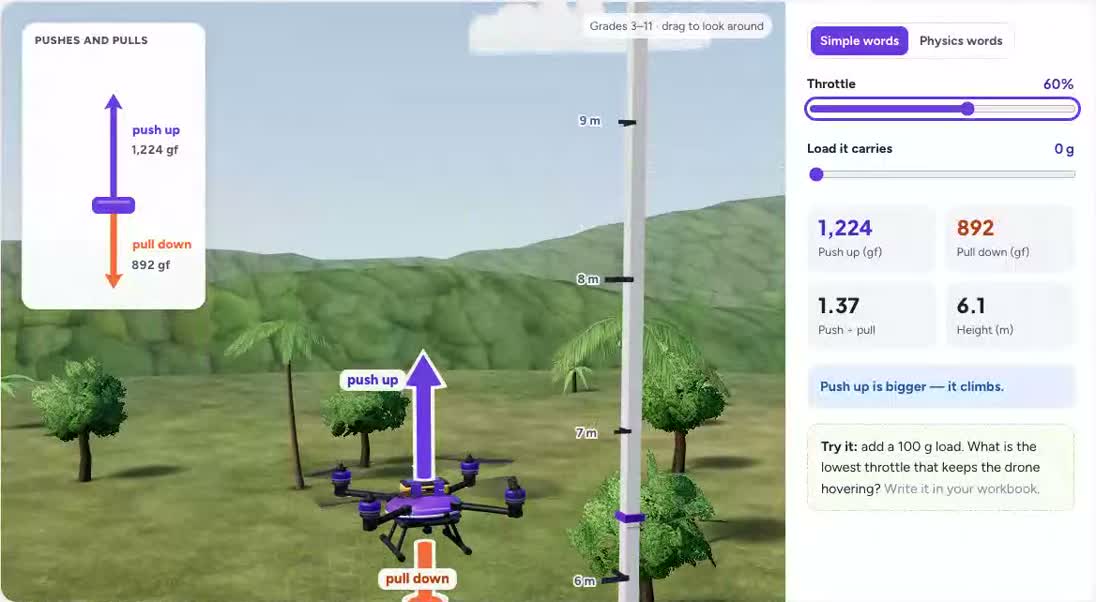
Thrust versus weight
Balanced and unbalanced forces
Grades 3–6 · Grades 7–8 · Grades 9–11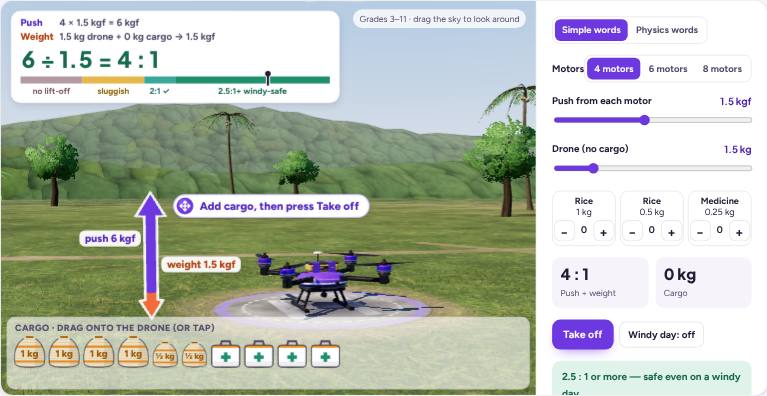
Can it lift off?
Thrust-to-weight ratio
Grades 3–6 · Grades 7–8 · Grades 9–11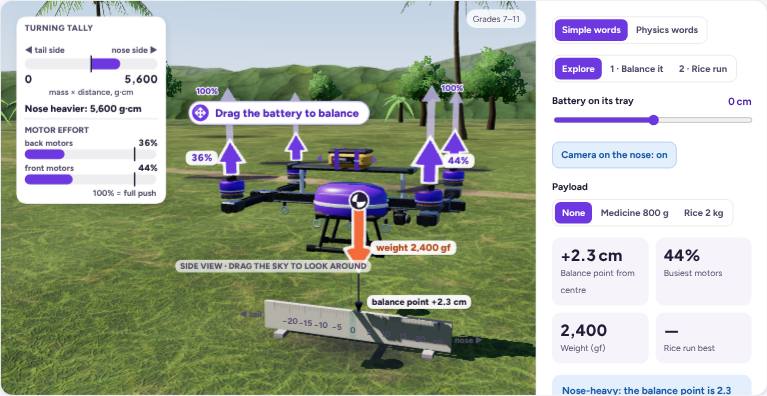
Find the balance point
Centre of gravity and moments
Grades 7–8 · Grades 9–11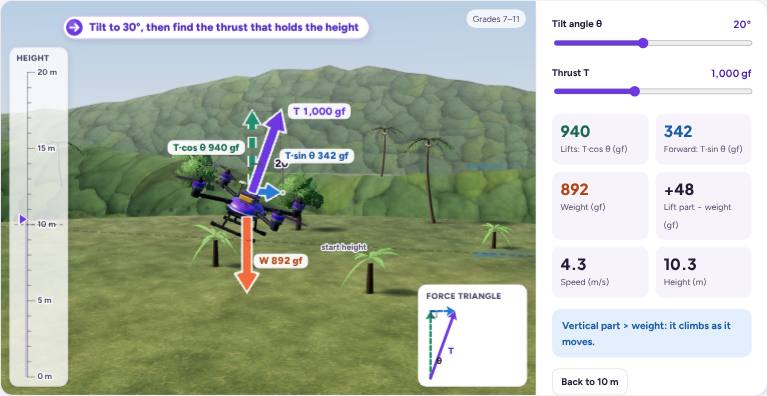
Tilt to fly forward
Force as a vector
Grades 7–8 · Grades 9–11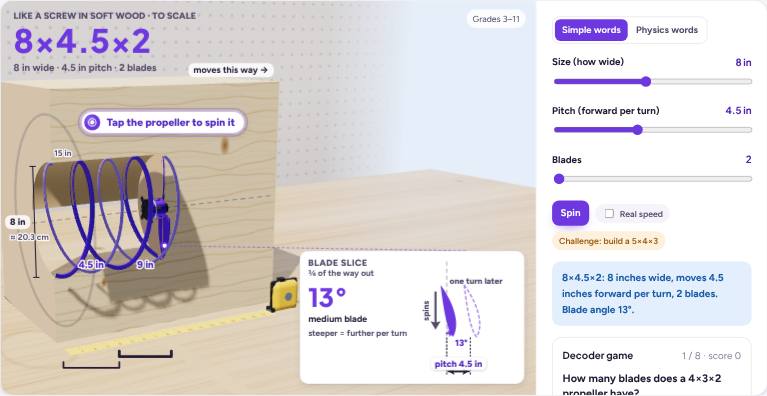
Propeller decoder
Size × pitch × blades
Grades 3–6 · Grades 7–8 · Grades 9–11How planes fly
Wings, control surfaces and fixed-wing drones
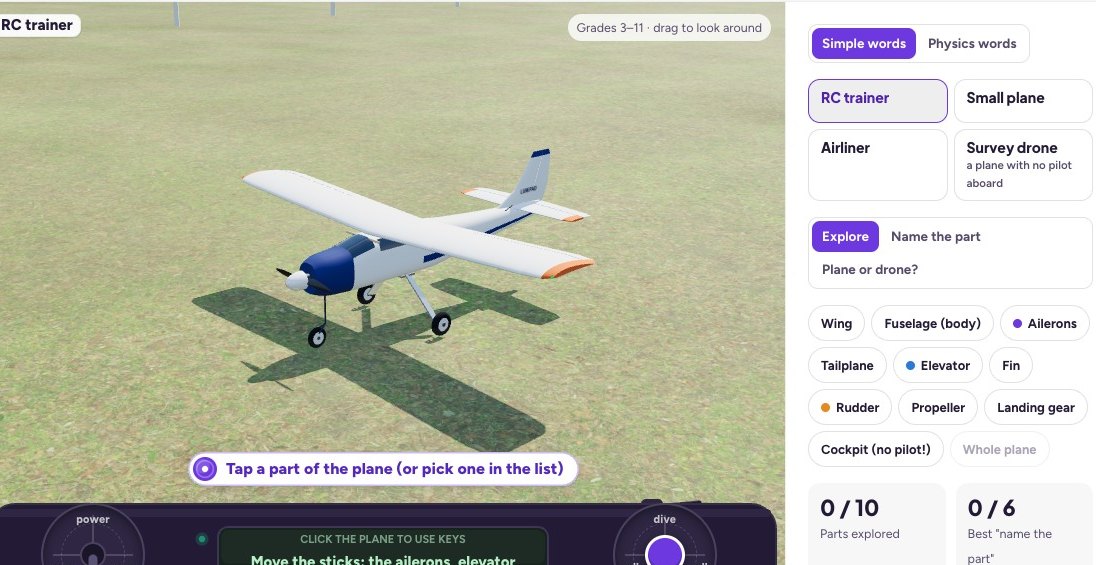
Parts of a plane
Wing, tail, ailerons, flaps
Grades 3–6 · Grades 7–8 · Grades 9–11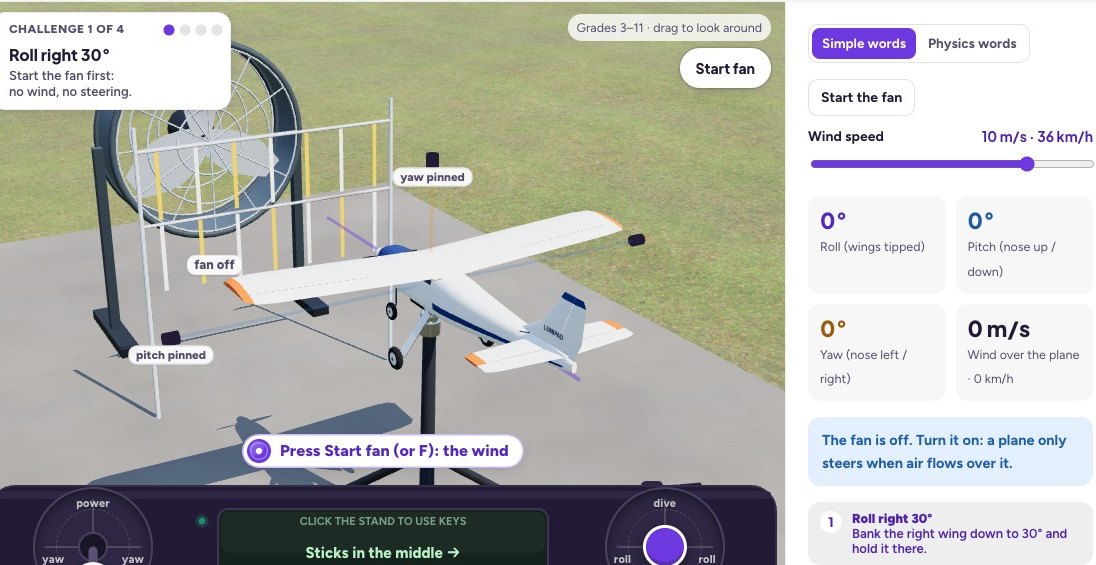
Ailerons, elevator, rudder
How a plane steers
Grades 3–6 · Grades 7–8 · Grades 9–11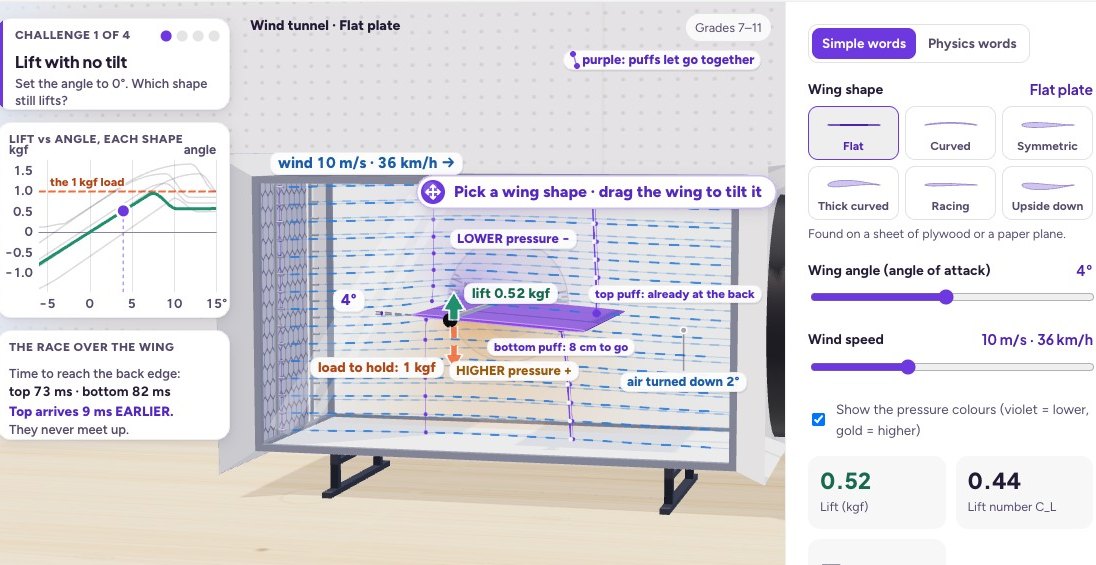
Shape of a wing
Turning the air down
Grades 7–8 · Grades 9–11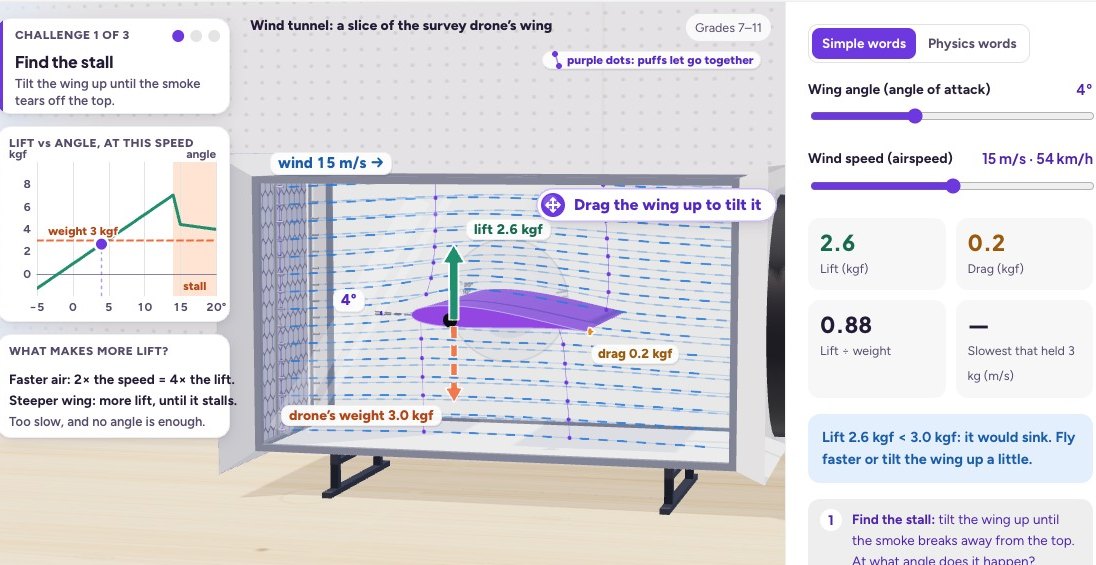
How a wing makes lift
Angle of attack and stall
Grades 7–8 · Grades 9–11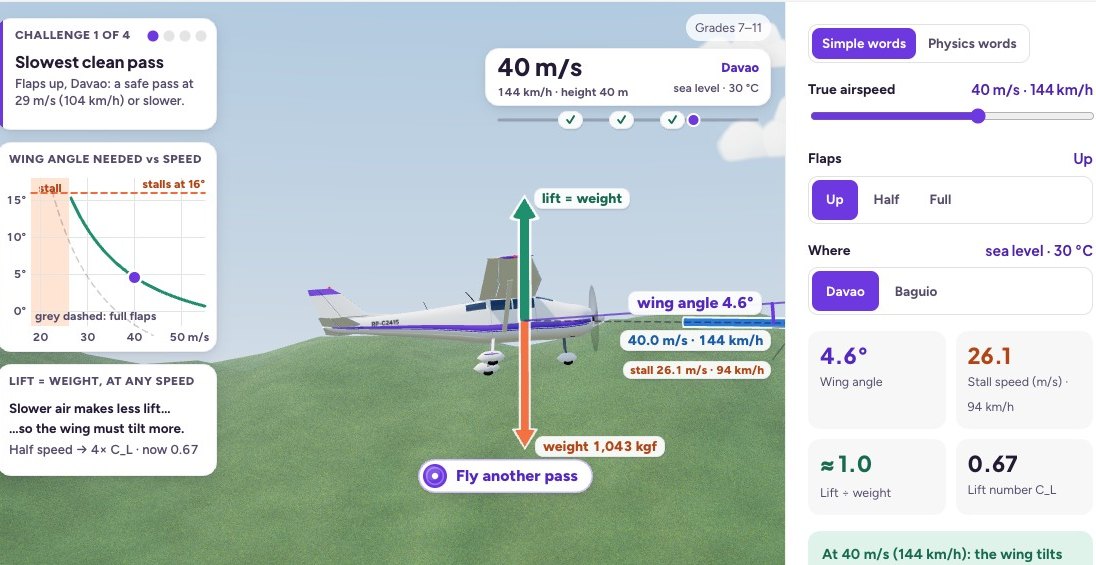
Too slow to fly?
Speed, wing angle and stall
Grades 7–8 · Grades 9–11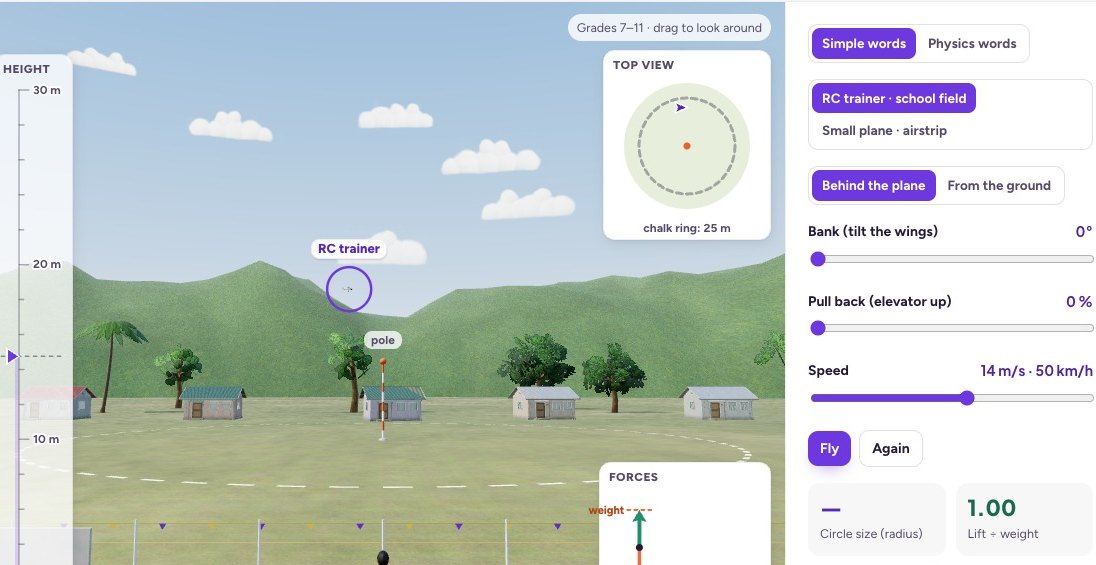
Bank to turn
Tilting the lift
Grades 7–8 · Grades 9–11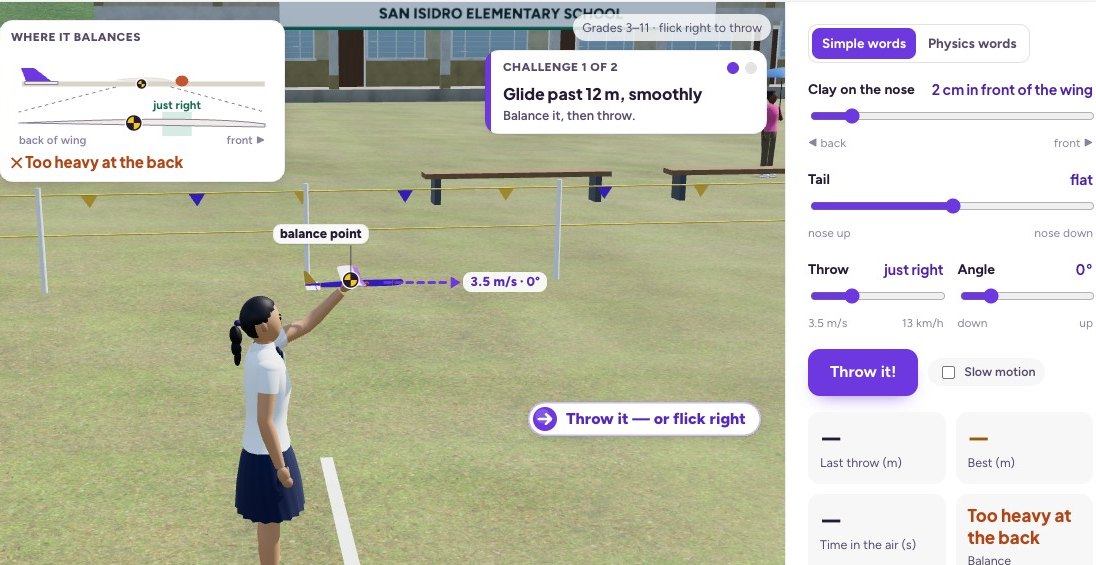
Balance a glider
Centre of gravity
Grades 3–6 · Grades 7–8 · Grades 9–11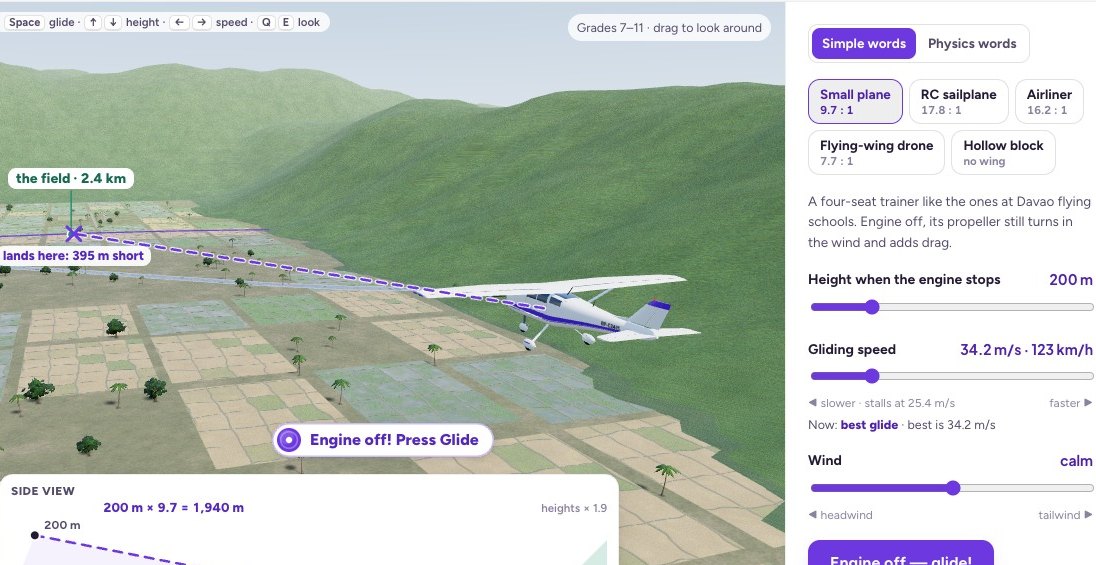
How far will it glide?
Glide ratio = distance ÷ height
Grades 7–8 · Grades 9–11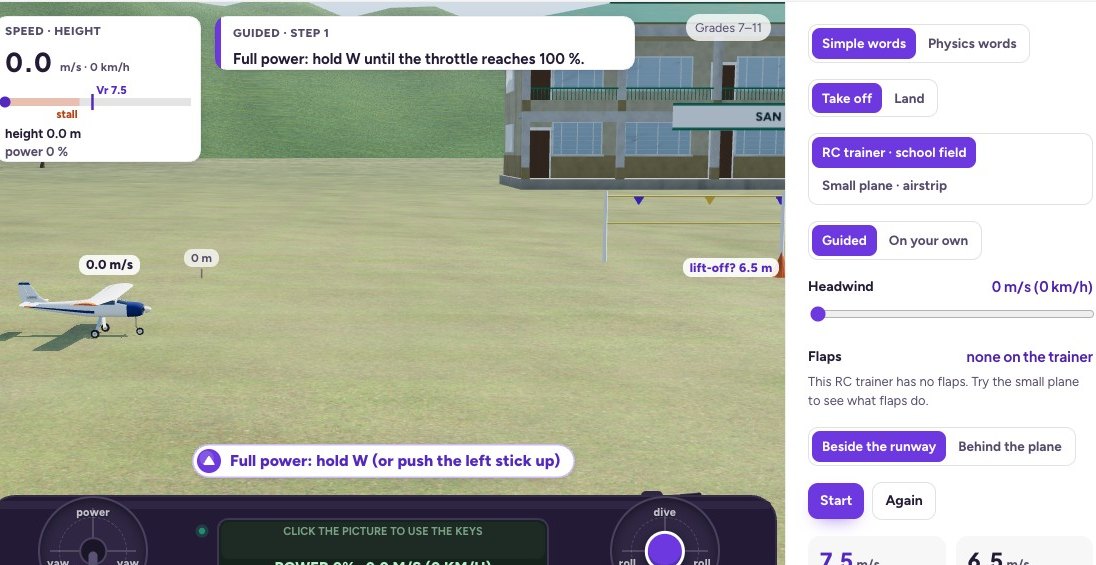
Take off and land
Rotate, climb, flare
Grades 7–8 · Grades 9–11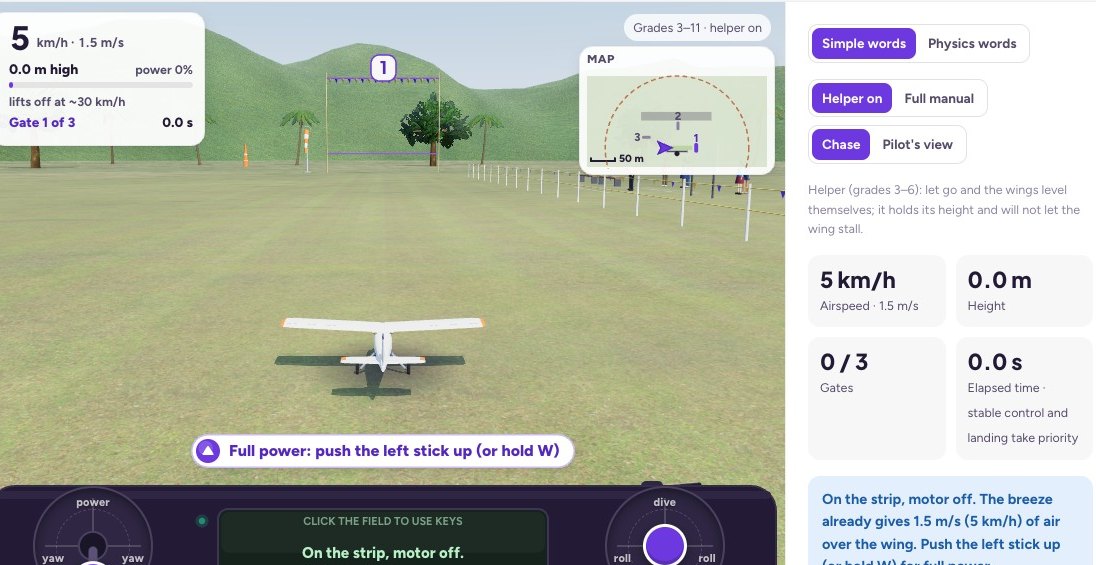
Fly an RC plane
Four channels, no hovering
Grades 3–6 · Grades 7–8 · Grades 9–11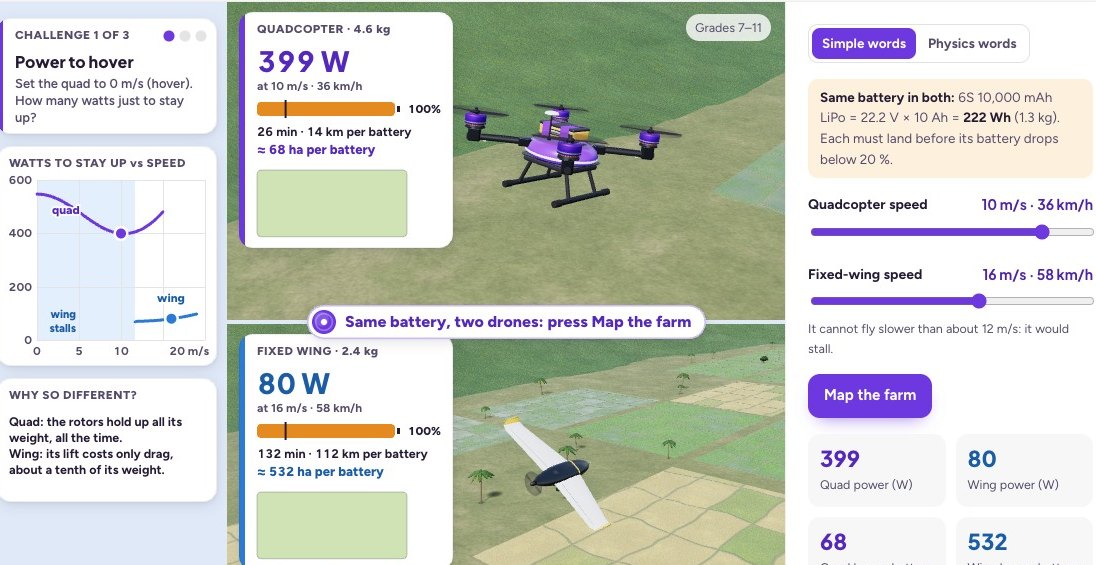
Wing or rotors?
Why mapping drones have wings
Grades 7–8 · Grades 9–11How VTOL aircraft fly
Vertical take-off, wing cruise and the transition between them
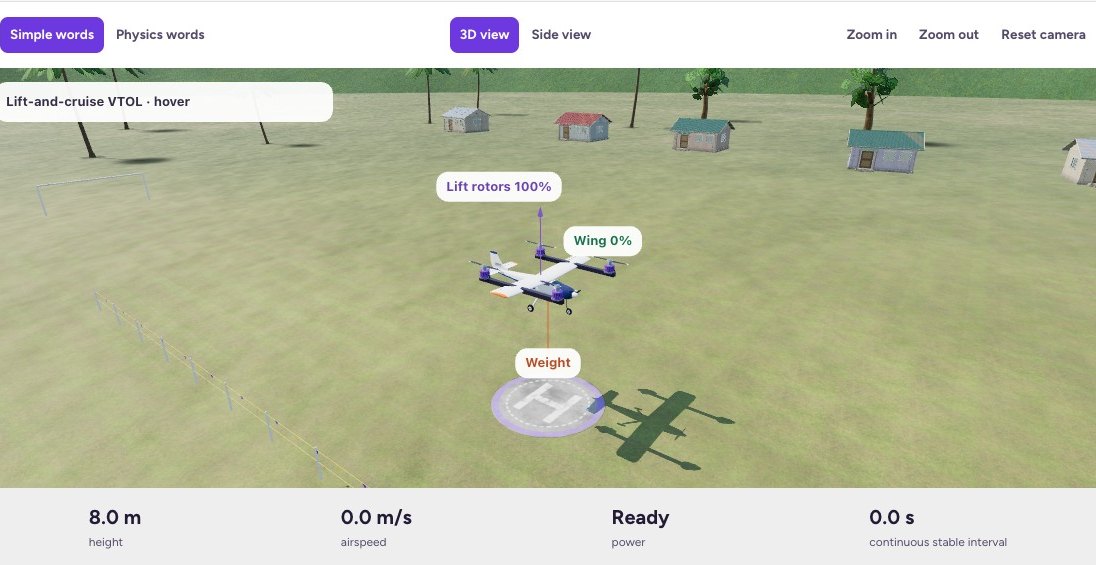
Who is holding the VTOL up?
Wing lift + rotor lift = weight
Grades 3–6 · Grades 7–8 · Grades 9–11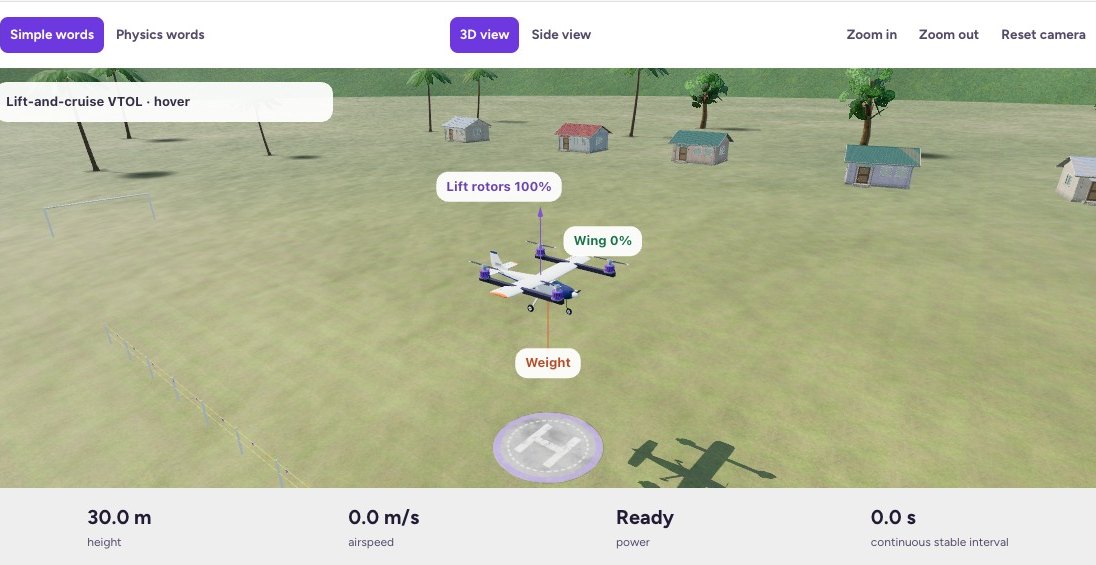
Make the VTOL transition
Hover → accelerate → wing cruise
Grades 3–6 · Grades 7–8 · Grades 9–11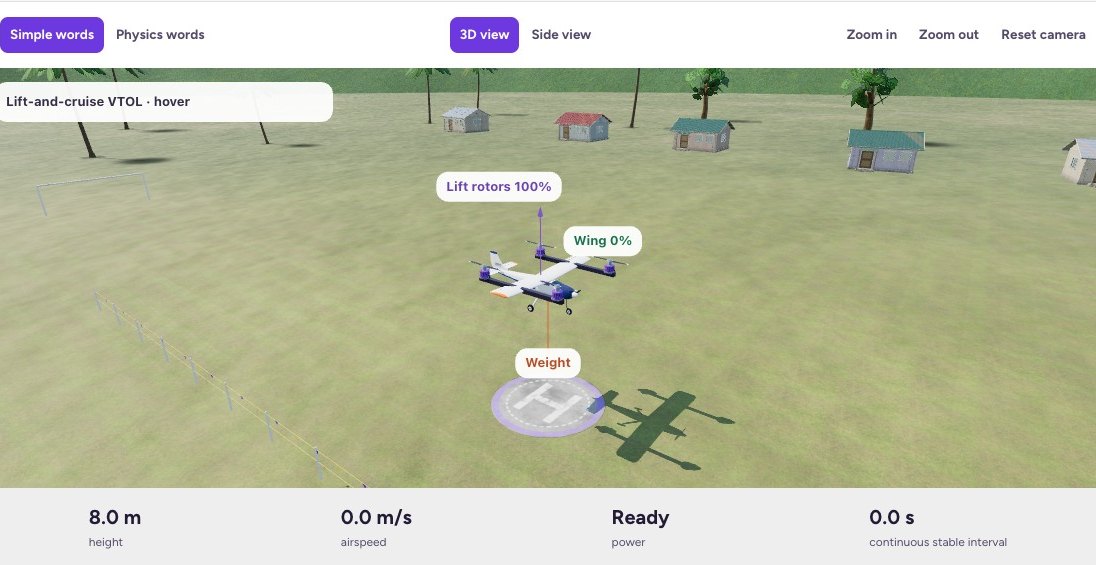
Budget a VTOL delivery
Hover time, cruise distance and reserve
Grades 3–6 · Grades 7–8 · Grades 9–11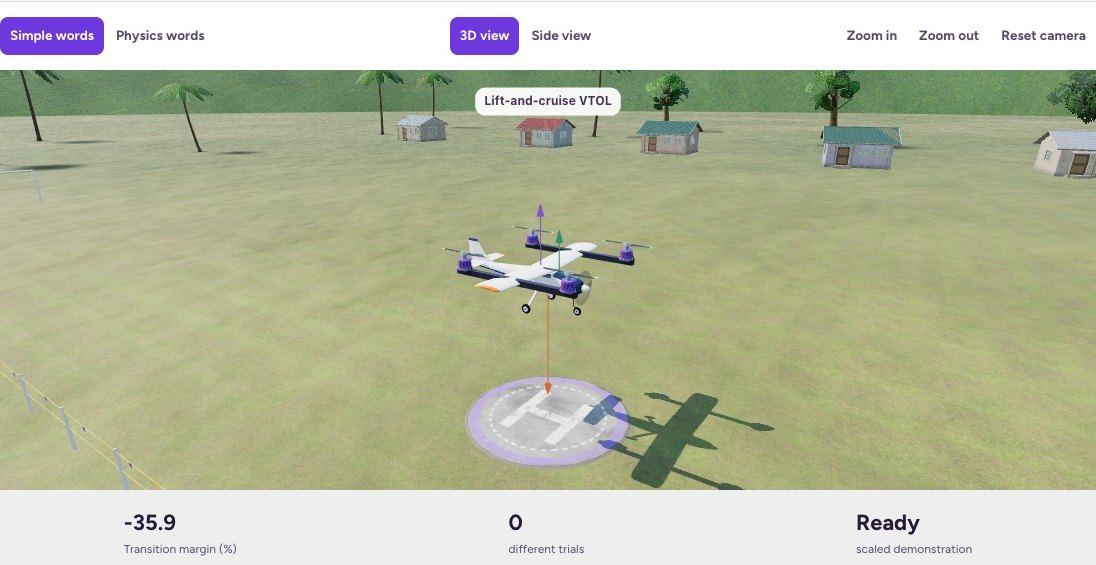
Continue or abort the transition?
Airspeed, height and payload
Grades 3–6 · Grades 7–8 · Grades 9–11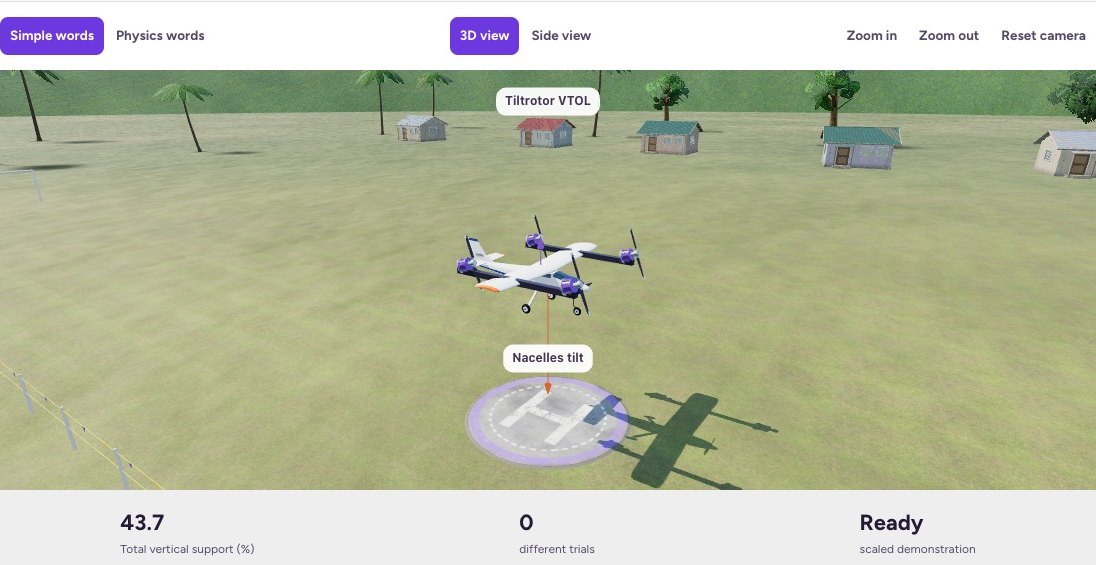
Three ways to fly vertically
Lift-and-cruise, tiltrotor, tailsitter
Grades 3–6 · Grades 7–8 · Grades 9–11How helicopters fly
Collective, cyclic, anti-torque and a steady hover
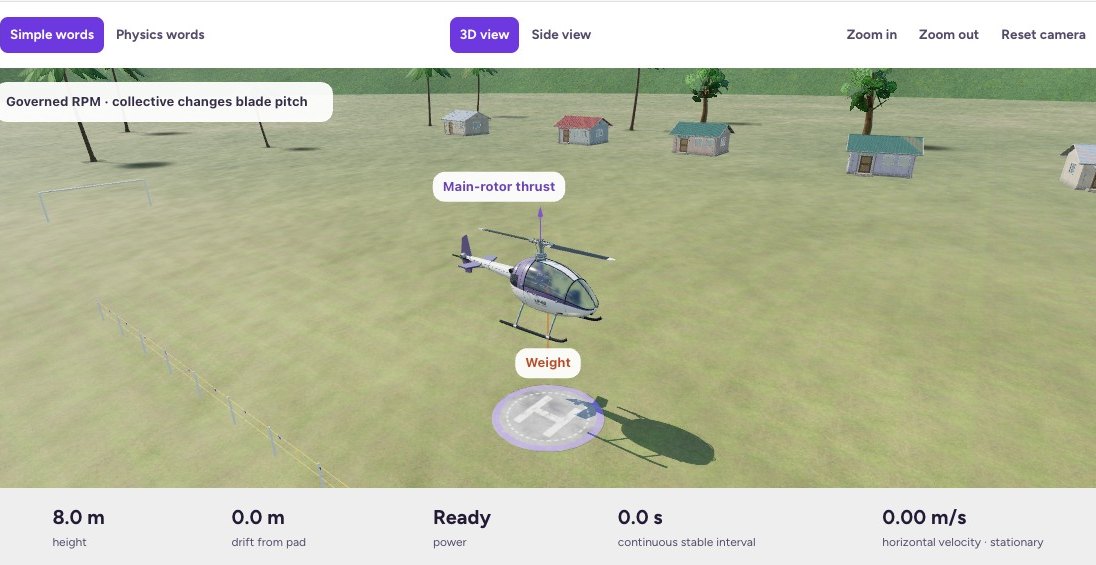
Collective and cyclic
Blade pitch and a tilted rotor disc
Grades 3–6 · Grades 7–8 · Grades 9–11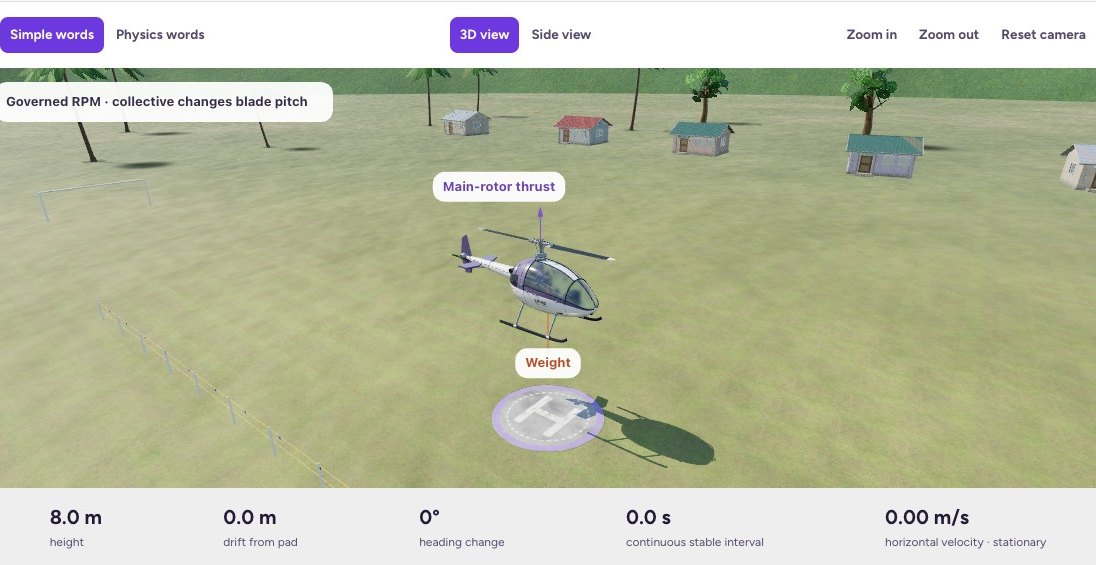
Why a helicopter needs a tail rotor
Equal and opposite torque
Grades 3–6 · Grades 7–8 · Grades 9–11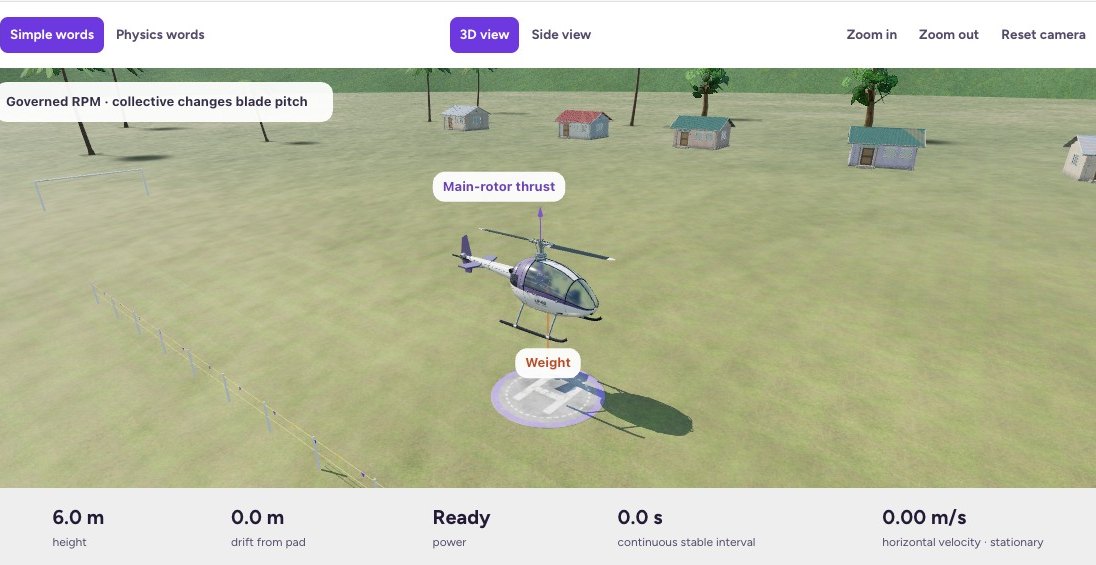
Hold the helicopter over the pad
Small corrections, steady hover
Grades 3–6 · Grades 7–8 · Grades 9–11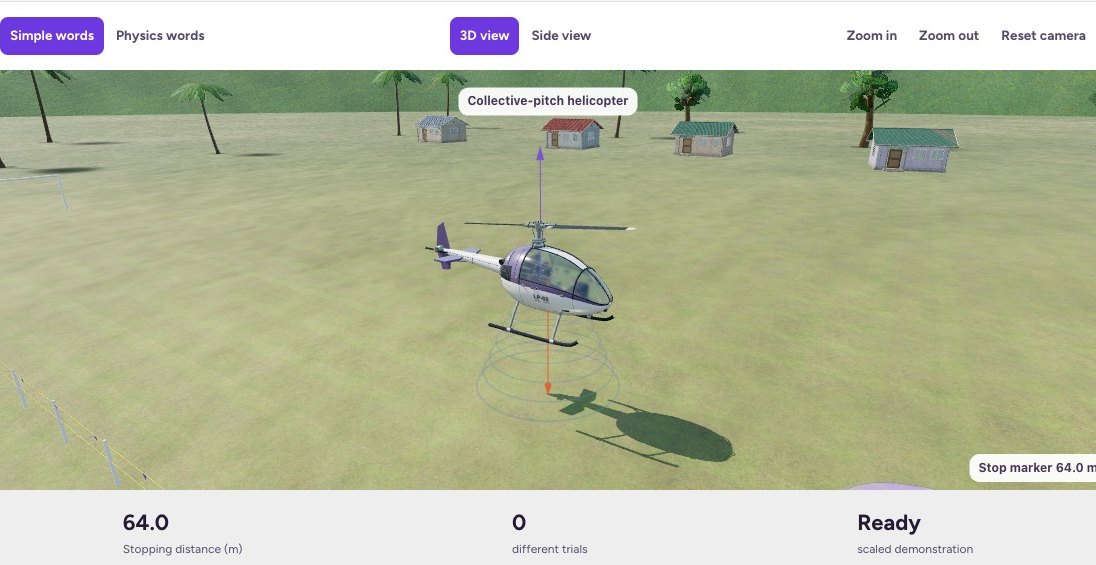
From hover to a precise approach
Momentum and stopping distance
Grades 3–6 · Grades 7–8 · Grades 9–11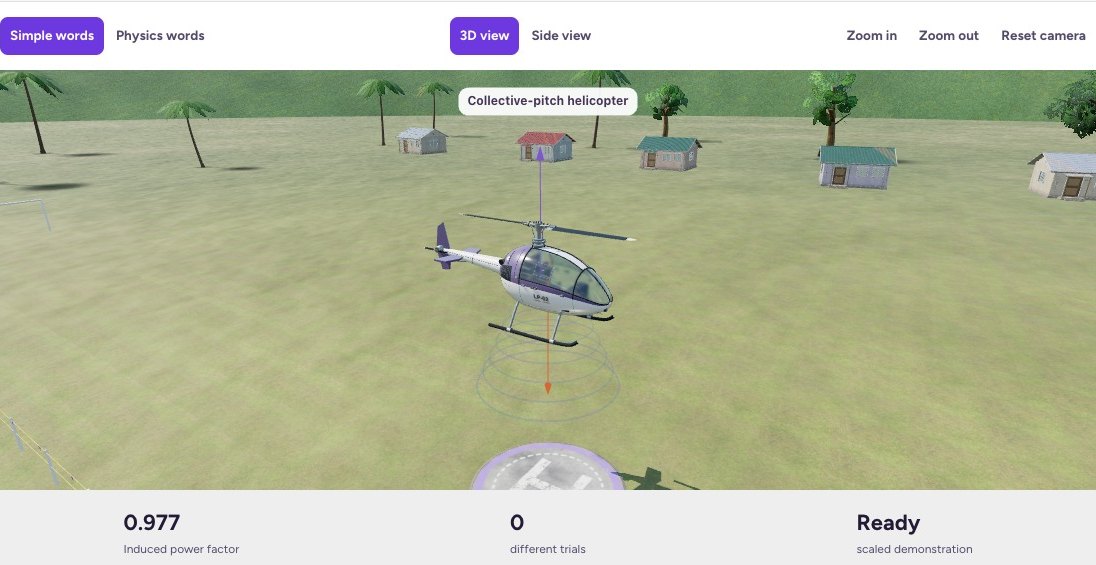
Hover near and away from the ground
Rotor height and induced power
Grades 3–6 · Grades 7–8 · Grades 9–11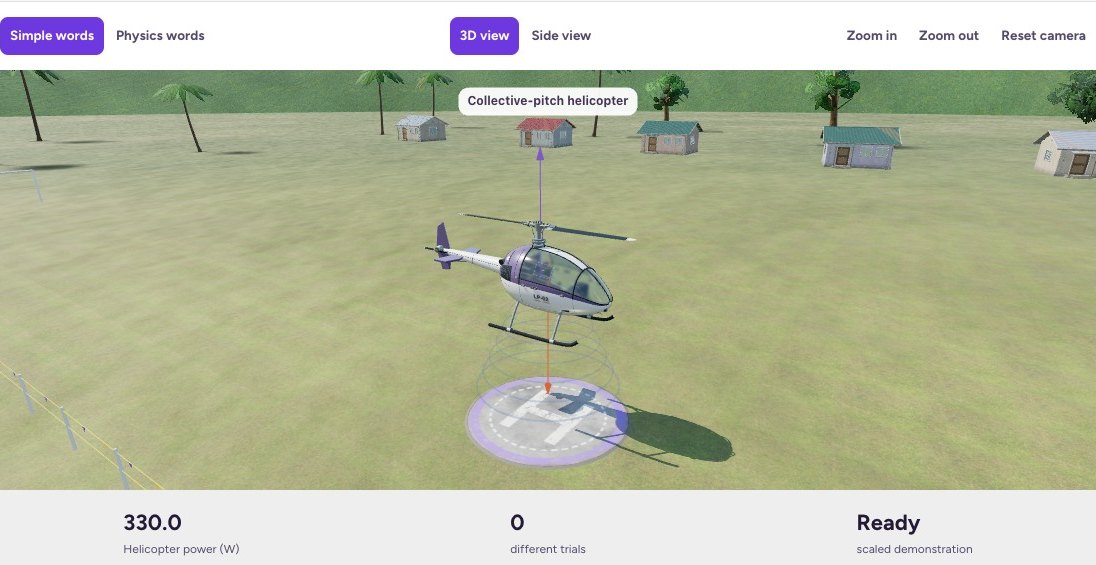
Find the economical helicopter speed
Induced power versus drag
Grades 3–6 · Grades 7–8 · Grades 9–11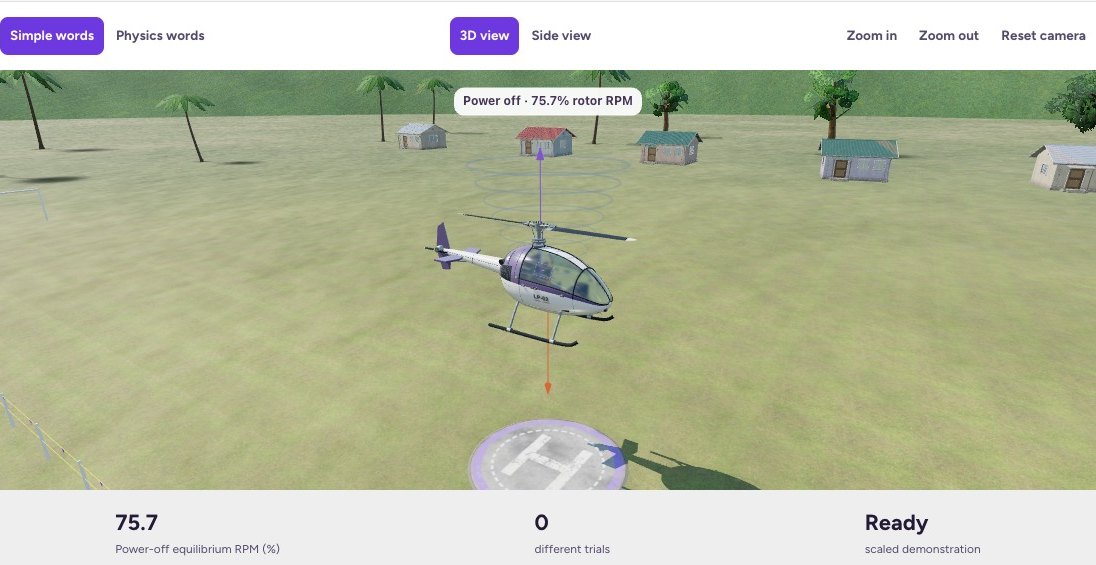
Where does rotor energy come from?
Power-off airflow and rotor RPM
Grades 9–11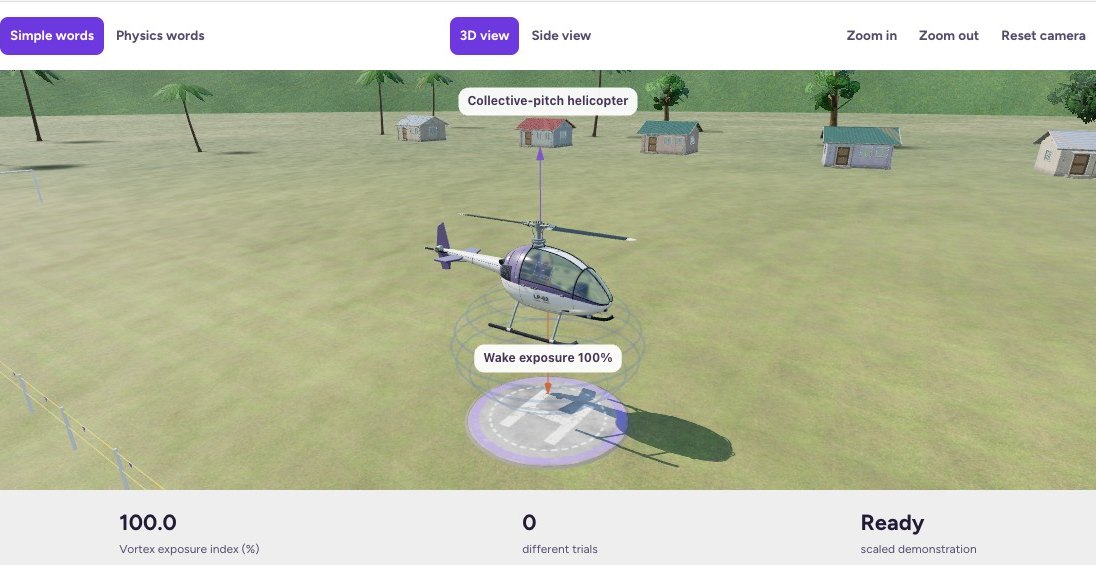
Explore powered-descent airflow
Vortex-ring exposure
Grades 9–11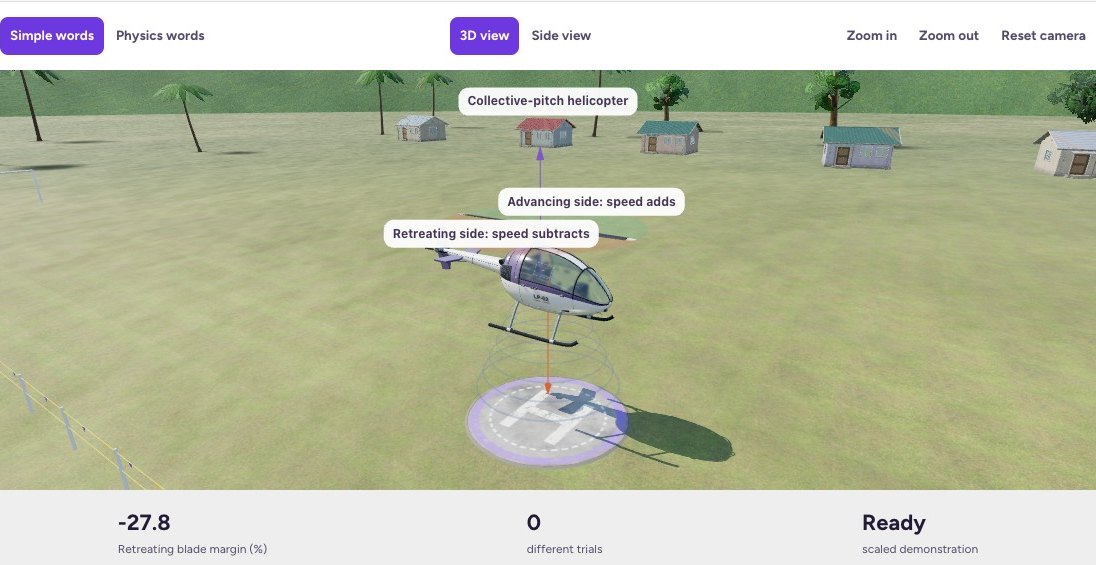
Why helicopter speed has limits
Advancing and retreating blades
Grades 9–11Controlling the drone
Sticks, radio and the flight controller
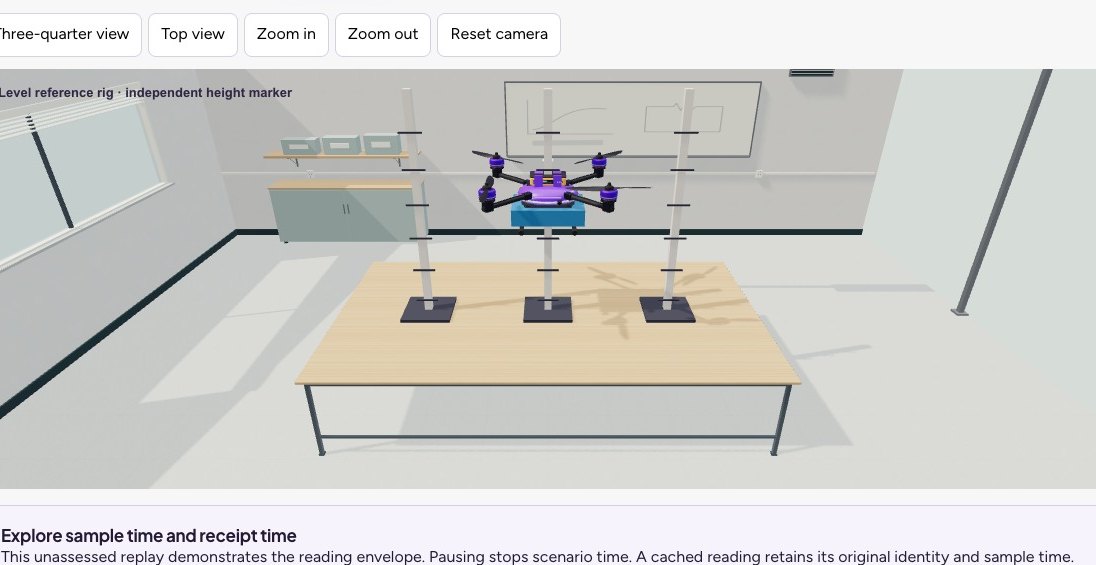
Sensor roles, calibration and trustworthy evidence
Readings, calibration, timestamps and independent evidence
Grades 7–8 · Grades 9–11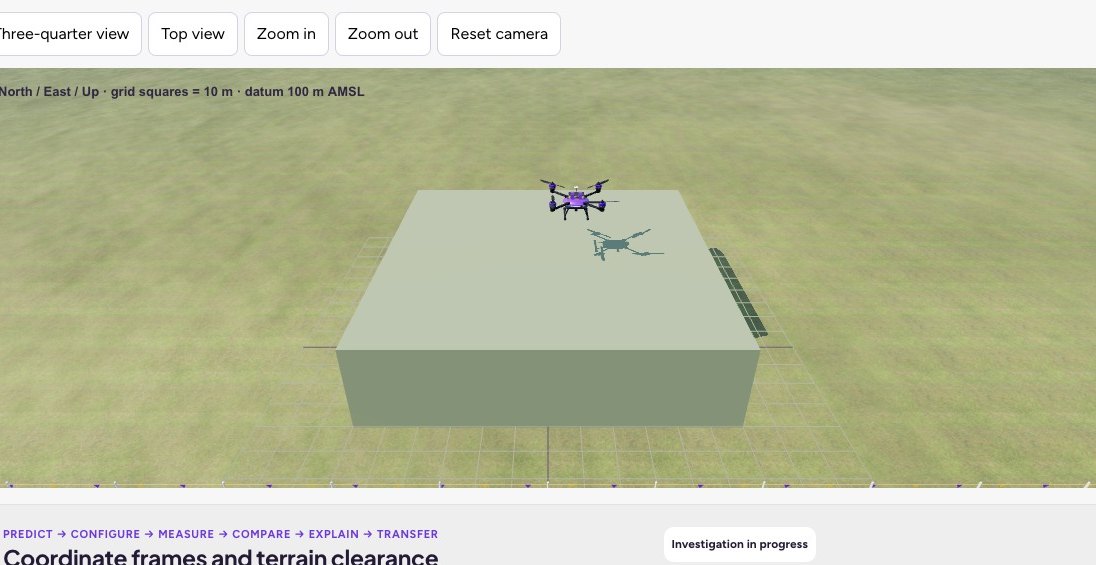
Coordinate frames and terrain clearance
Body/world coordinates, height datums and terrain clearance
Grades 7–8 · Grades 9–11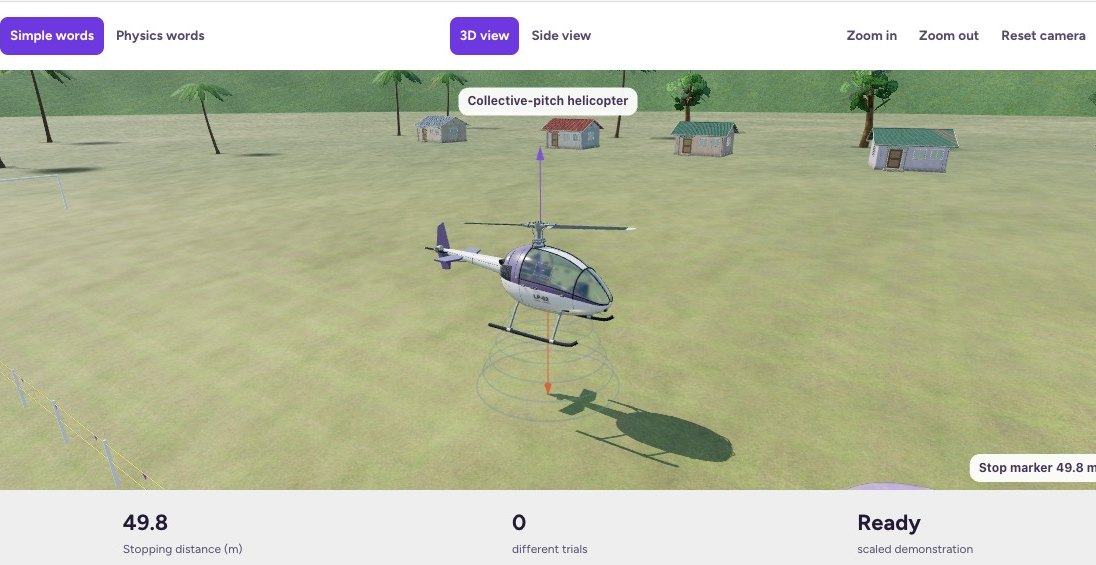
When the mission changes
Detect, decide, respond
Grades 3–6 · Grades 7–8 · Grades 9–11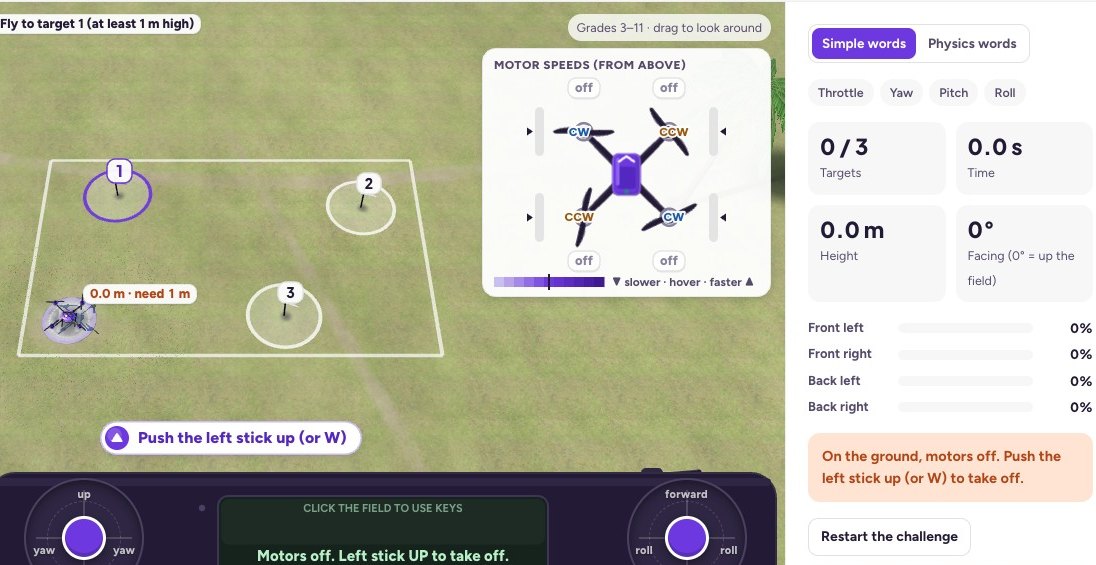
The four controls
Throttle, yaw, pitch, roll
Grades 3–6 · Grades 7–8 · Grades 9–11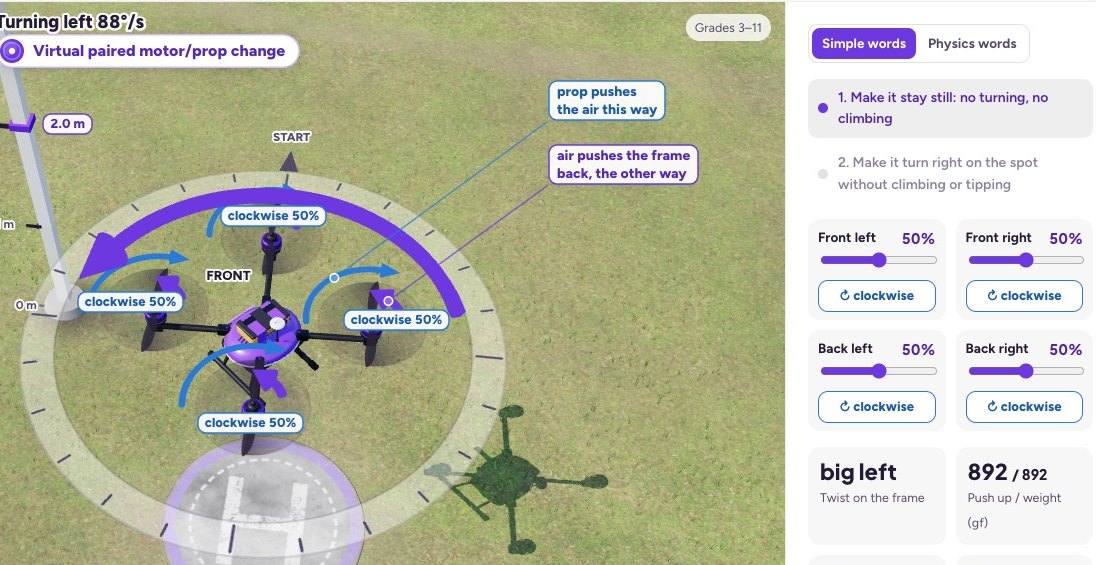
Why props spin both ways
Spin directions and twist
Grades 3–6 · Grades 7–8 · Grades 9–11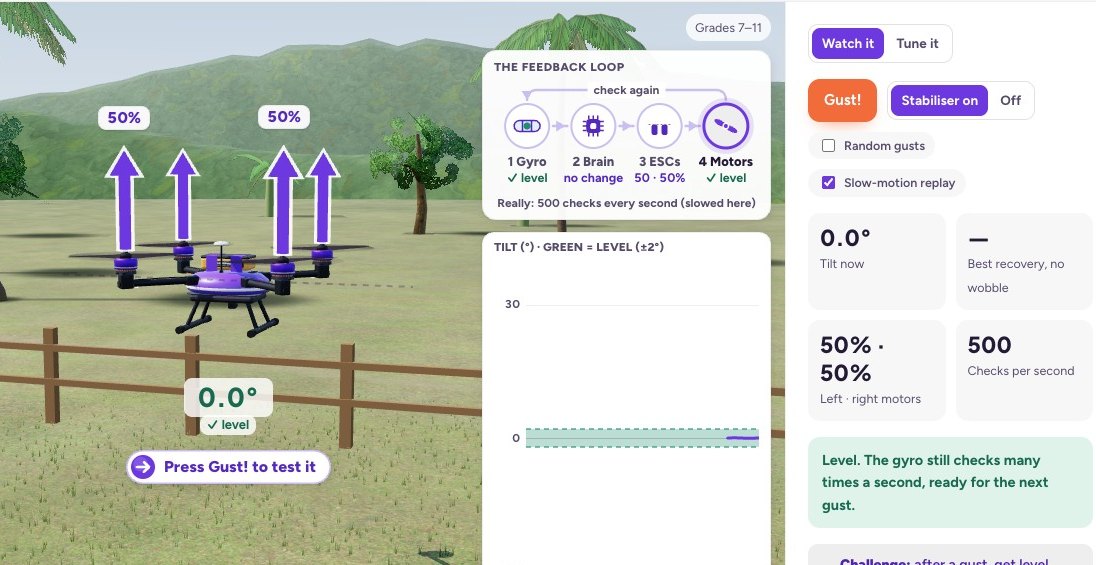
How a drone stays level
The feedback loop
Grades 7–8 · Grades 9–11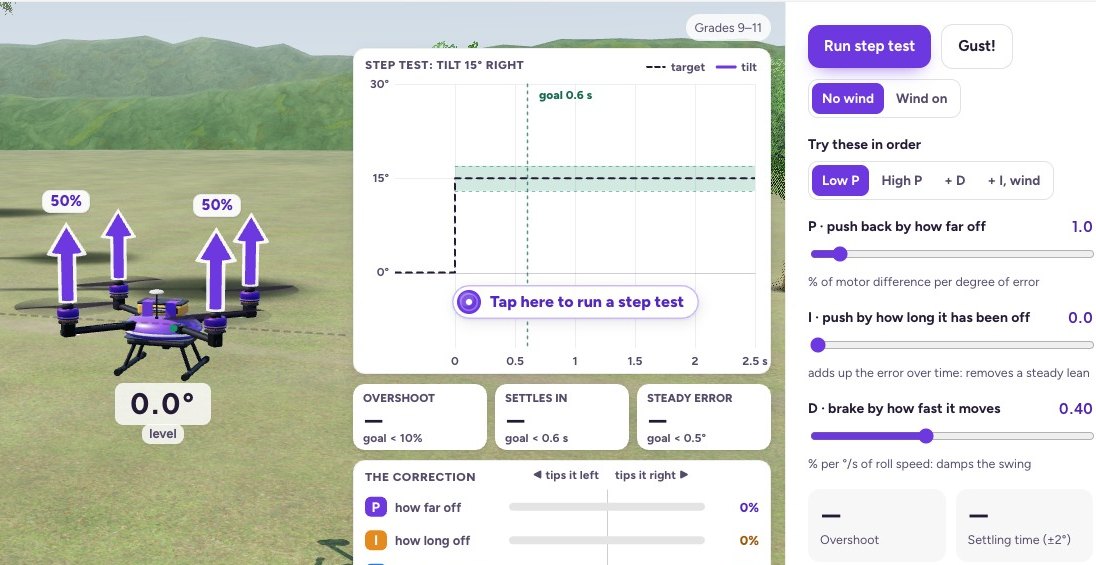
Tune the stabiliser
P, I and D on a graph
Grades 9–11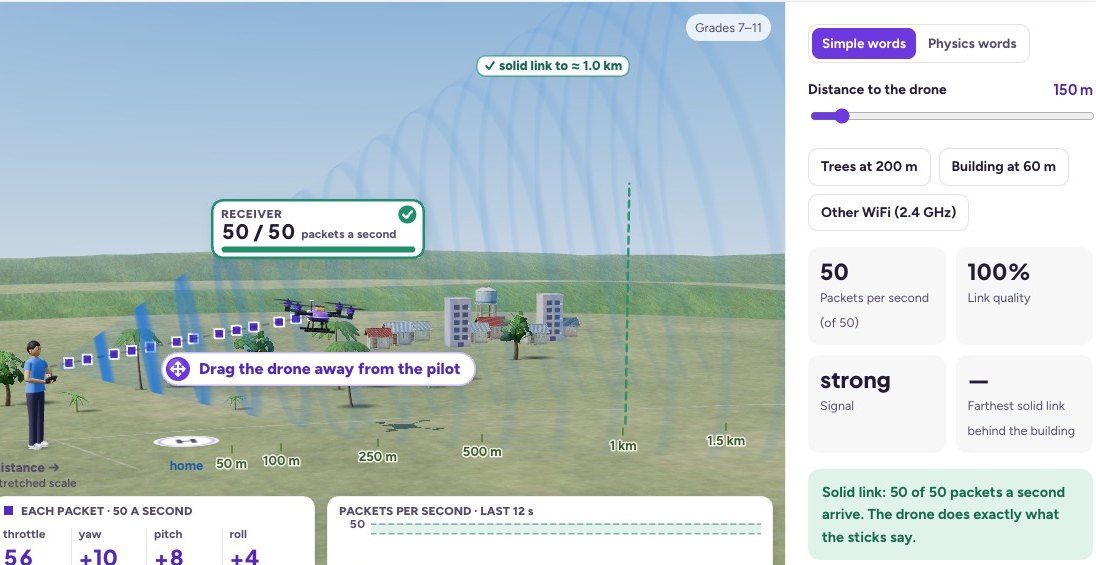
2.4 GHz radio link
Signal and failsafe
Grades 7–8 · Grades 9–11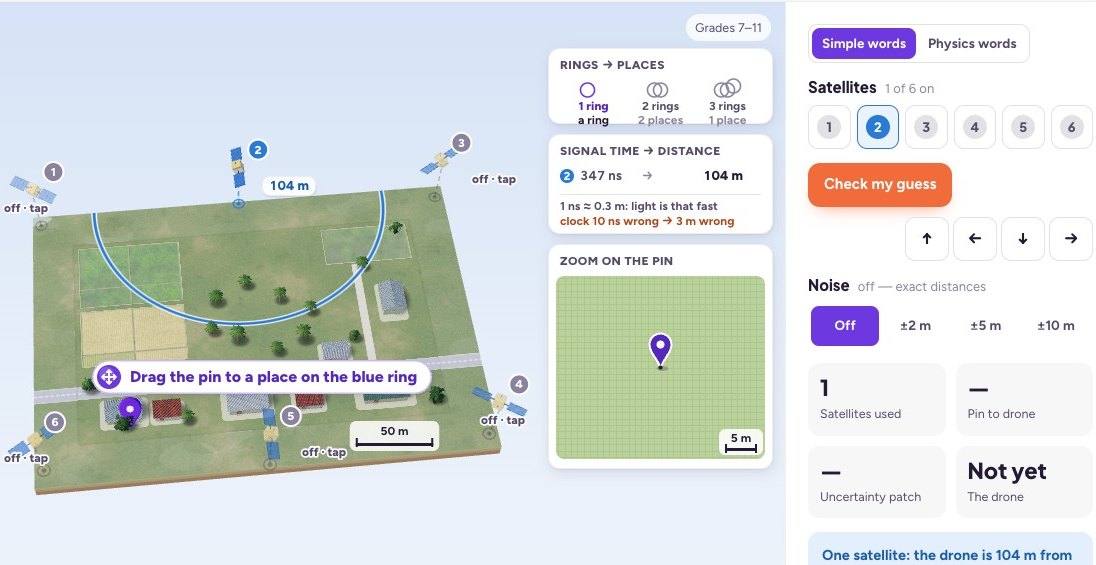
Where am I?
GPS and trilateration
Grades 7–8 · Grades 9–11Batteries and motors
Volts, watt-hours, KV and flight time
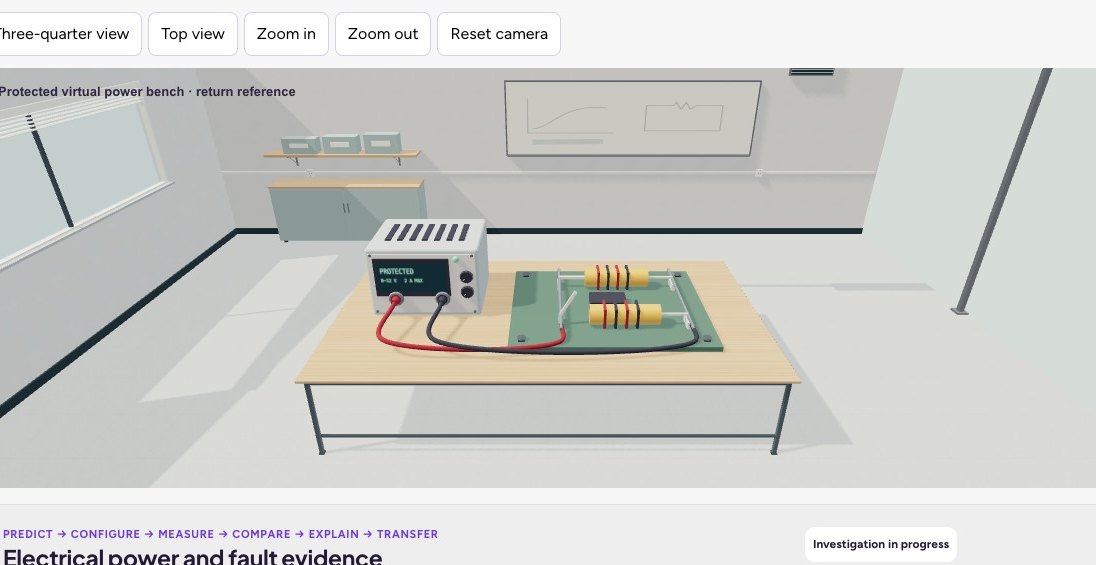
Electrical power and fault evidence
Current, voltage, power and protected fault diagnosis
Grades 7–8 · Grades 9–11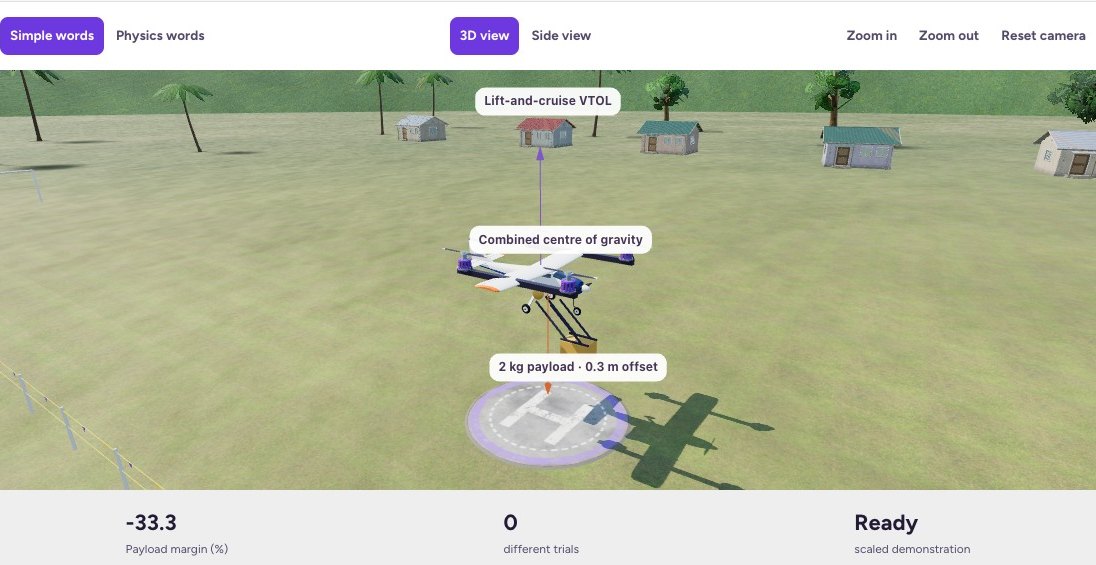
Can this aircraft carry the load?
Weight, balance and power margin
Grades 3–6 · Grades 7–8 · Grades 9–11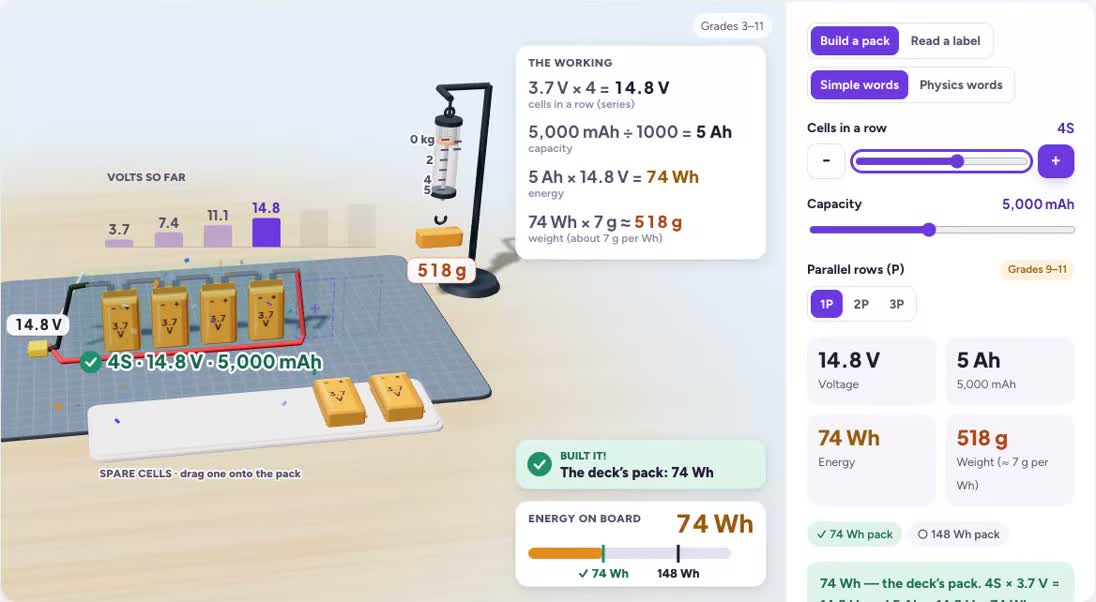
Battery builder
Cells, volts and watt-hours
Grades 3–6 · Grades 7–8 · Grades 9–11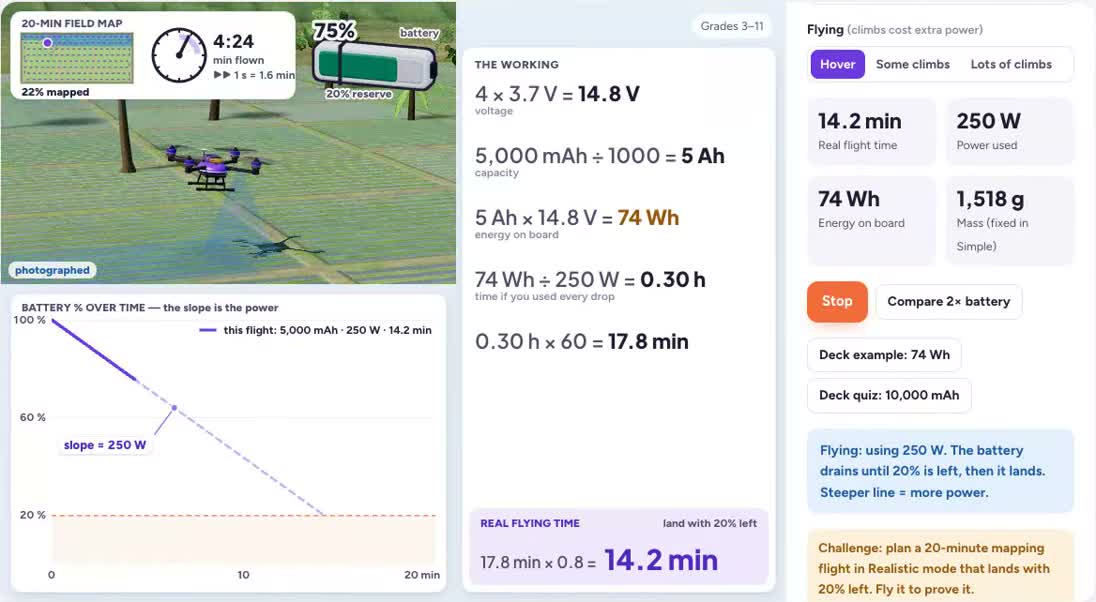
How long will it fly?
Wh ÷ W × 0.8
Grades 3–6 · Grades 7–8 · Grades 9–11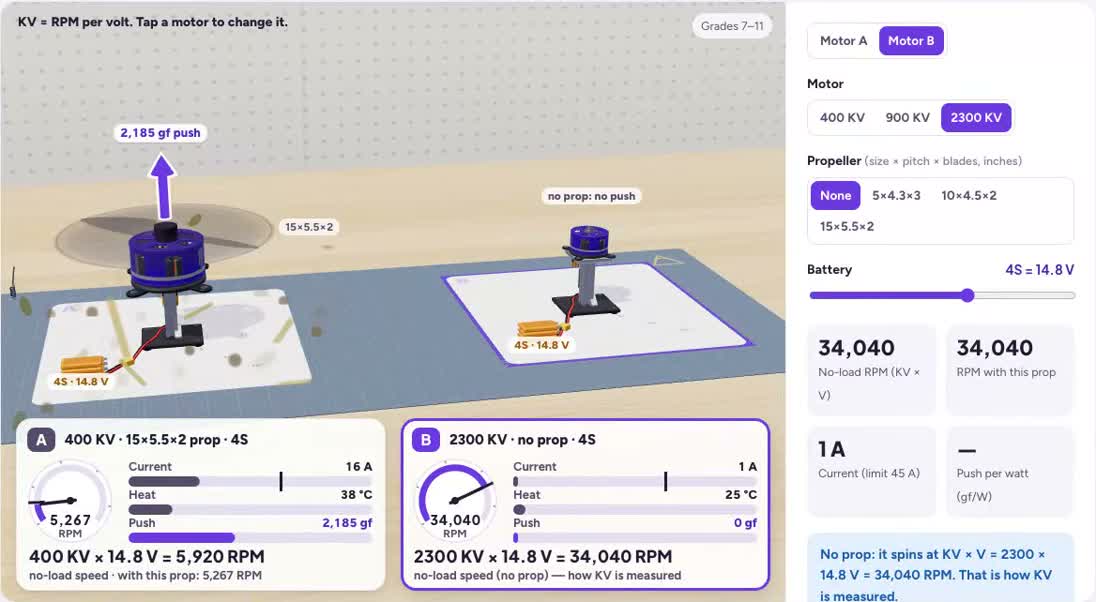
Motor KV
RPM per volt
Grades 7–8 · Grades 9–11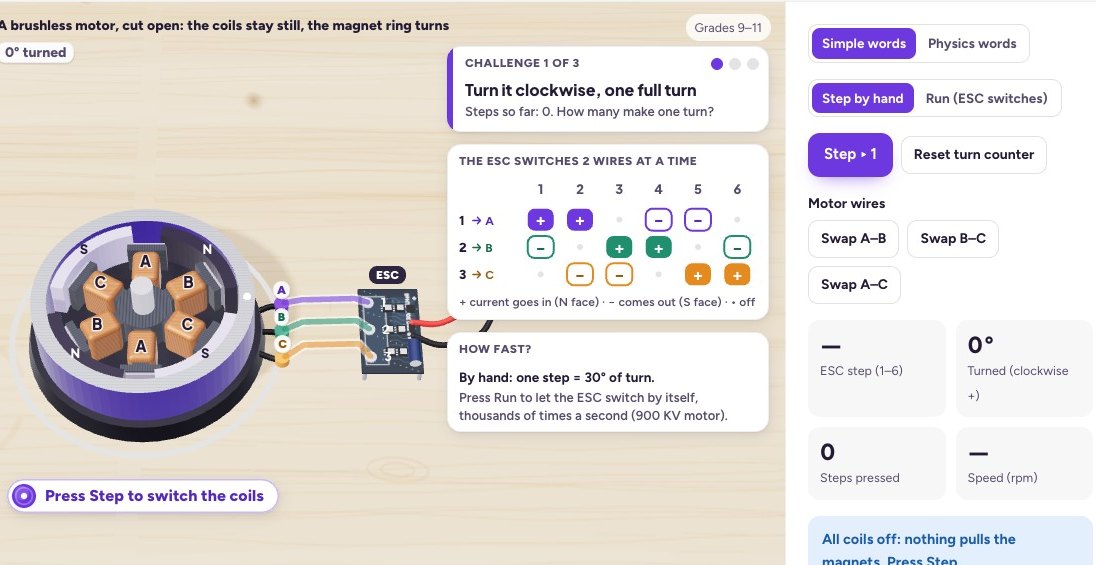
Inside a motor
Coils, magnets and switching
Grades 9–11Missions and safety
Flying on its own, delivering, and the rules
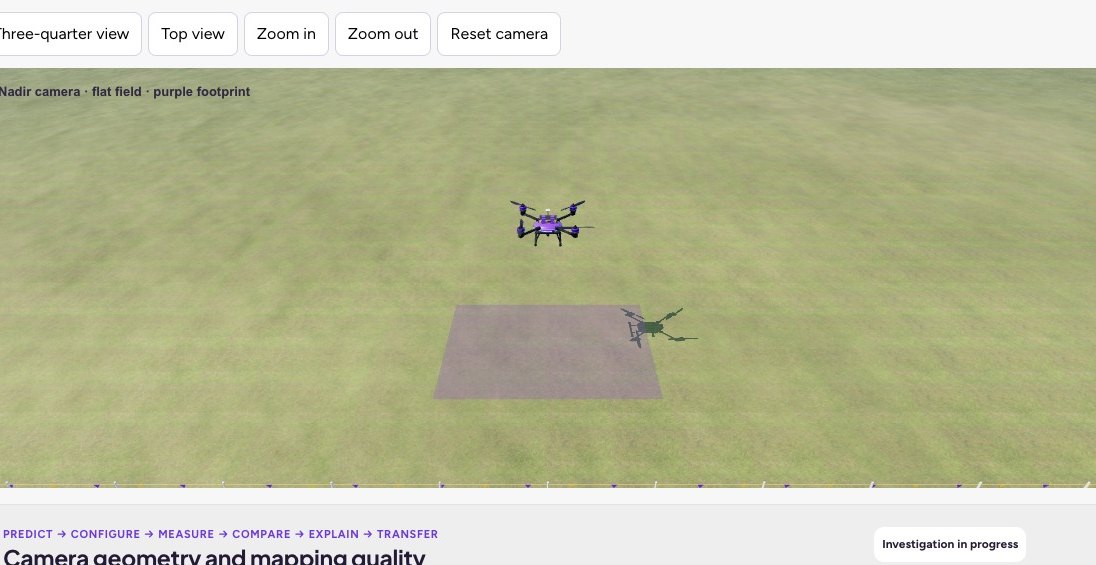
Camera geometry and mapping quality
Footprints, overlap, resolution and motion blur
Grades 7–8 · Grades 9–11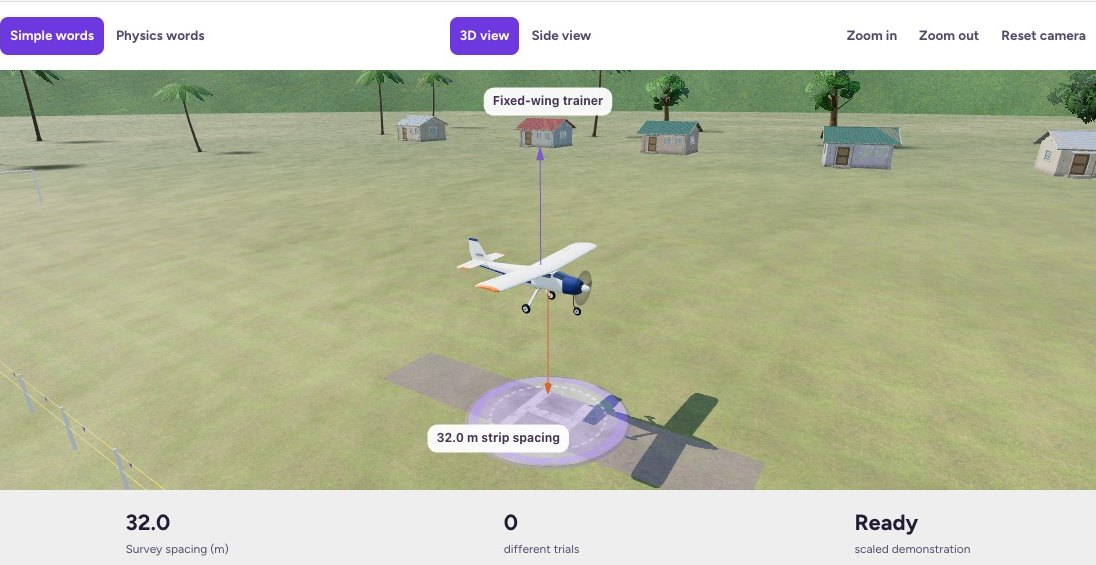
Design a survey from measurements
Overlap, spacing and route generation
Grades 3–6 · Grades 7–8 · Grades 9–11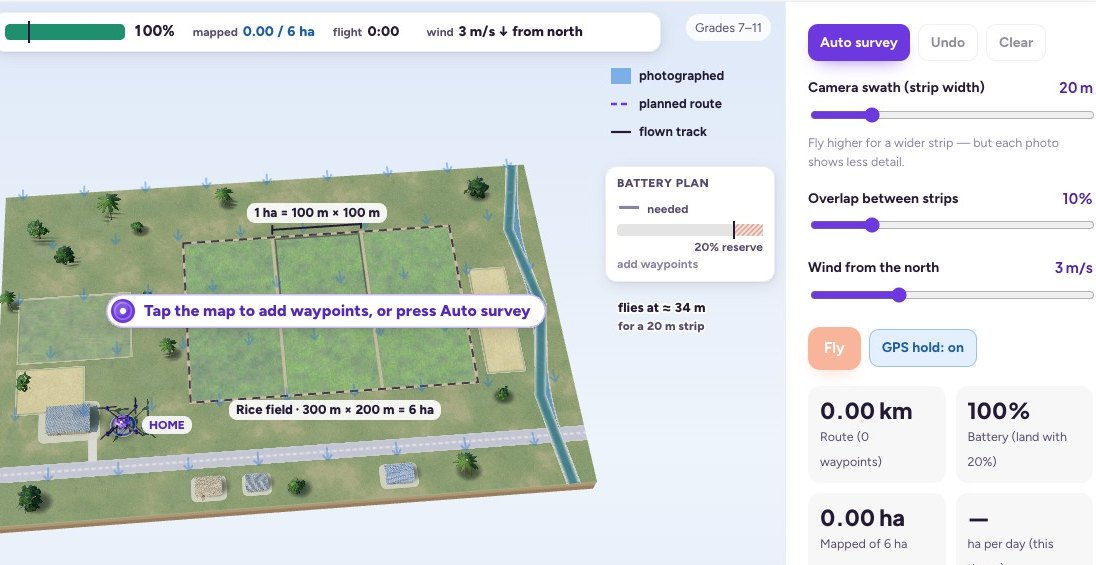
Waypoint mission
Flying without the sticks
Grades 7–8 · Grades 9–11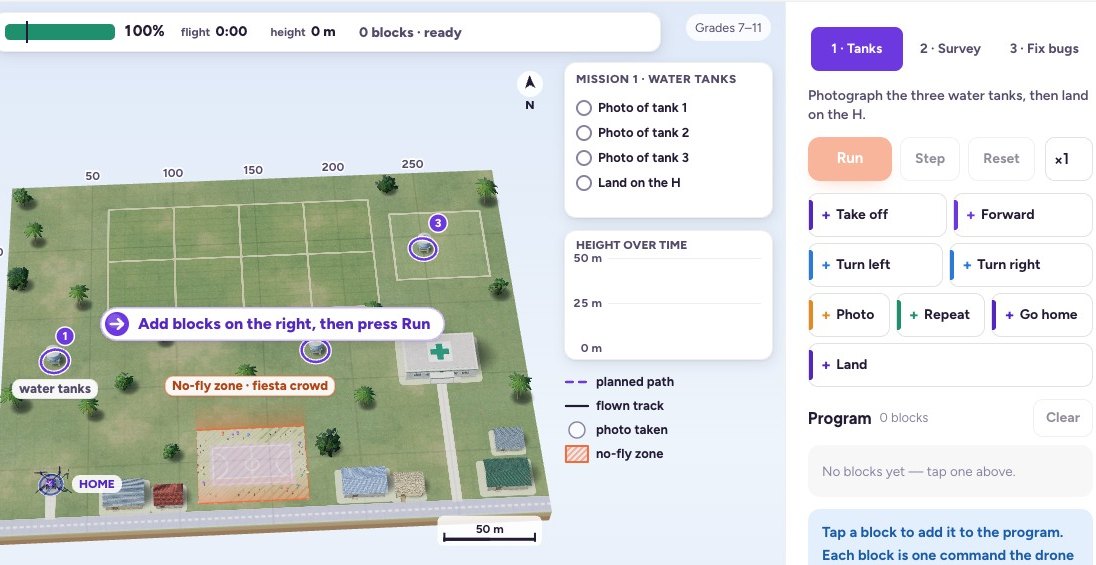
Program the mission
Commands, loops and bugs
Grades 7–8 · Grades 9–11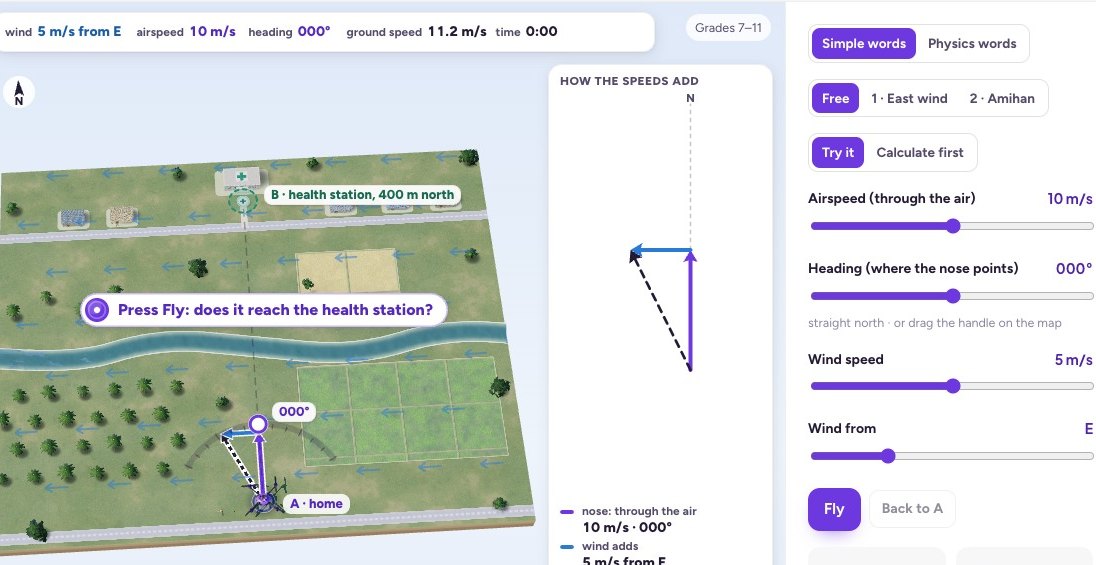
Fly straight in a crosswind
Adding velocity vectors
Grades 7–8 · Grades 9–11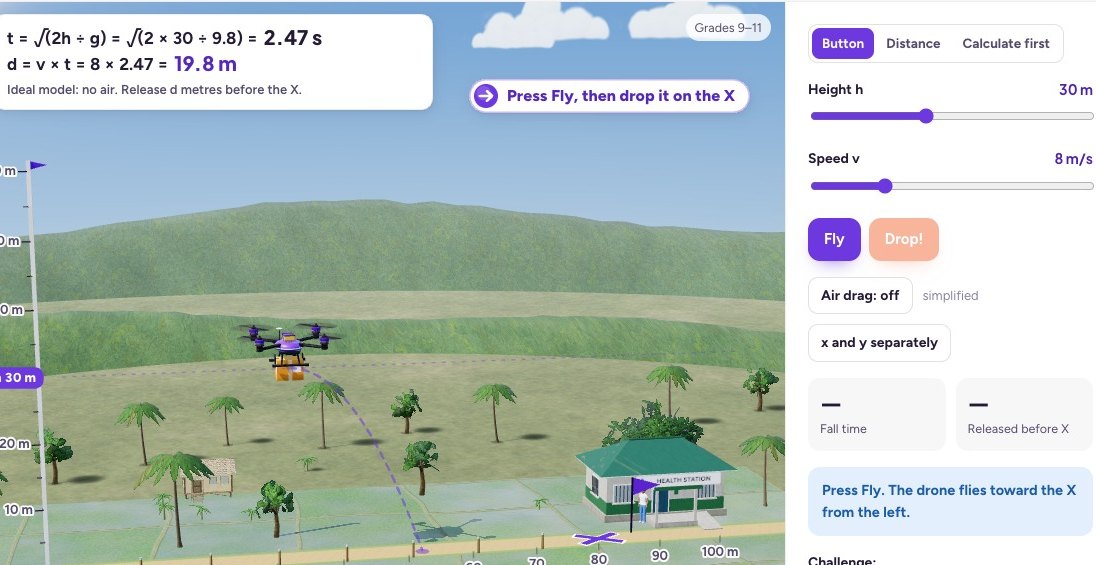
Drop it on the X
Projectile motion
Grades 9–11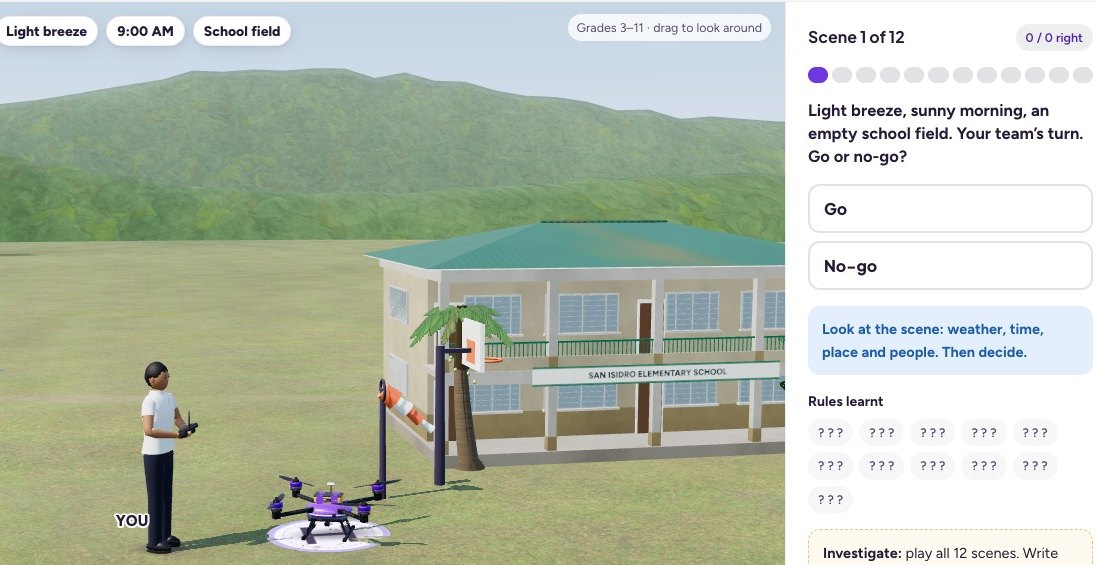
Go or no-go?
Safety and the rules
Grades 3–6 · Grades 7–8 · Grades 9–11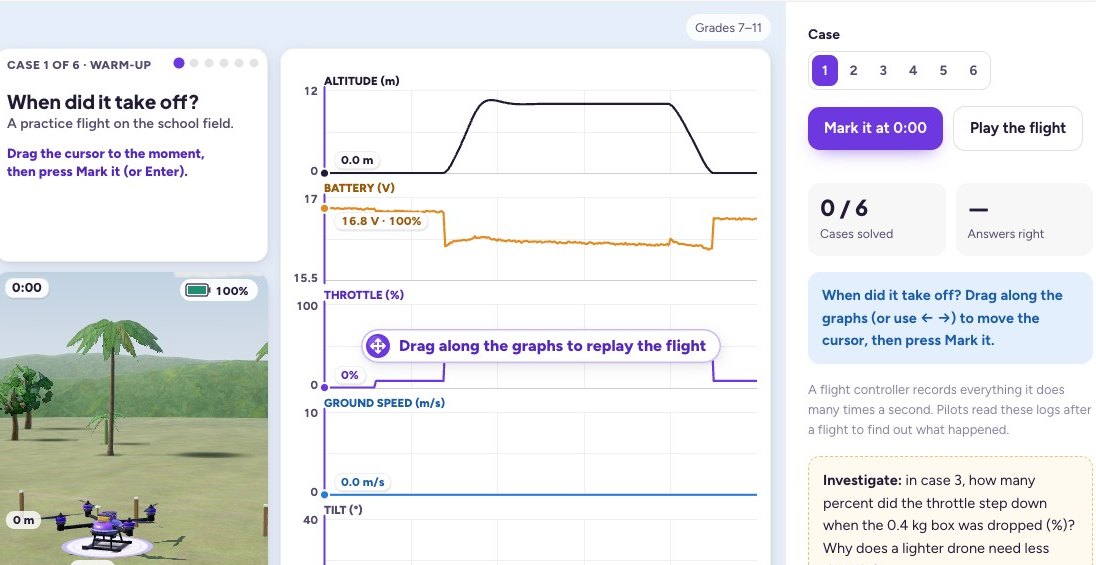
Read the flight log
Graphs as evidence
Grades 7–8 · Grades 9–11How teachers use the labs
Start with the public explanation and ask students to predict what will happen. Compare the preview with that prediction, then sign in to change the controls or run a program. Ask pairs to record one change and explain its effect using the science or programming concept on the page.
Run them with a class
Read the grade bands and teaching connections, choose one activity, and share its preview with students. The description is public; opening the interactive activity requires a free account.
Practise manual flight in the free drone simulator.