Explore the science
Missions and safety
Flying on its own, delivering, and the rules
A mission connects a purpose with a route, a set of actions and conditions for finishing safely. It is more than a line on a map. The aircraft needs enough energy, a suitable path and a way to recognise whether it has completed the task. These activities ask students to predict what a flight will do, then use the resulting motion or recorded data to check the prediction.
Waypoint mission introduces a planned route over a farm. Students can relate a position on the map to the sequence in which it will be visited. Program the mission uses commands and loops to express a task. Both activities encourage planning before execution, but a program also needs correct order and repetition. A route that looks reasonable can still fail if the instructions take a photograph at the wrong point or leave out the return.
Fly straight in a crosswind separates velocity through the air from velocity over the ground. The wind adds another velocity to the aircraft motion. Students should compare the direction the aircraft points with the path it actually follows. The activity is especially useful for discussing why a plan made from heading alone may miss a target. Record the wind and aircraft settings alongside the outcome.
Drop it on the X introduces the motion of a released package. The package does not lose its horizontal motion simply because it is no longer attached to the aircraft. Predicting a landing point requires thinking about the release state and the time spent falling. Use the lab calculation and worked example rather than treating the visual target as a guessing game. Change one release condition at a time so the comparison remains understandable.
Go or no-go? asks for decisions about a flight situation, while Read the flight log asks for evidence after a flight. These are complementary habits: identify conditions before launching, then inspect what happened rather than relying only on memory. Classroom scenarios help students practise reasoning; the relevant operating rules and real aircraft procedures still need to be checked for an actual flight. Finish the topic with a mission plan that states the objective, the main uncertainty, the stopping condition and the evidence that would show success.
Missions and safety
Flying on its own, delivering, and the rules
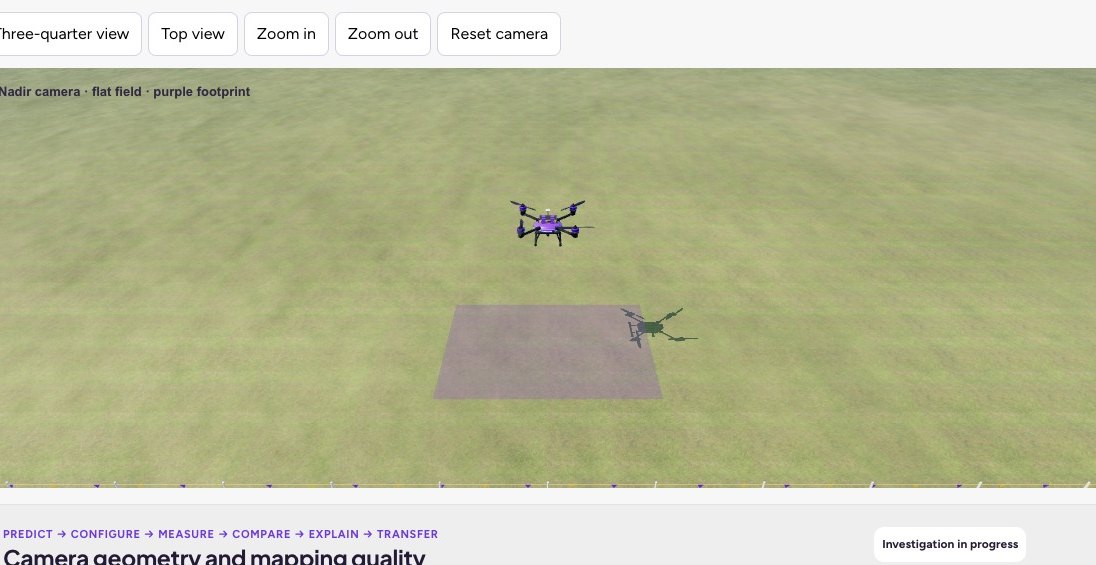
Camera geometry and mapping quality
Footprints, overlap, resolution and motion blur
Grades 7–8 · Grades 9–11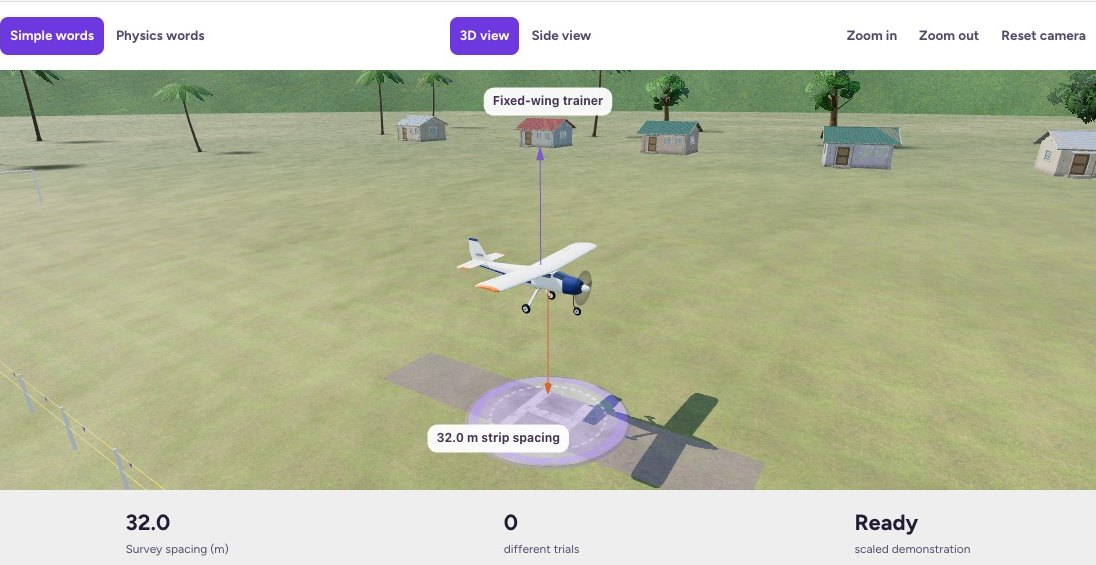
Design a survey from measurements
Overlap, spacing and route generation
Grades 3–6 · Grades 7–8 · Grades 9–11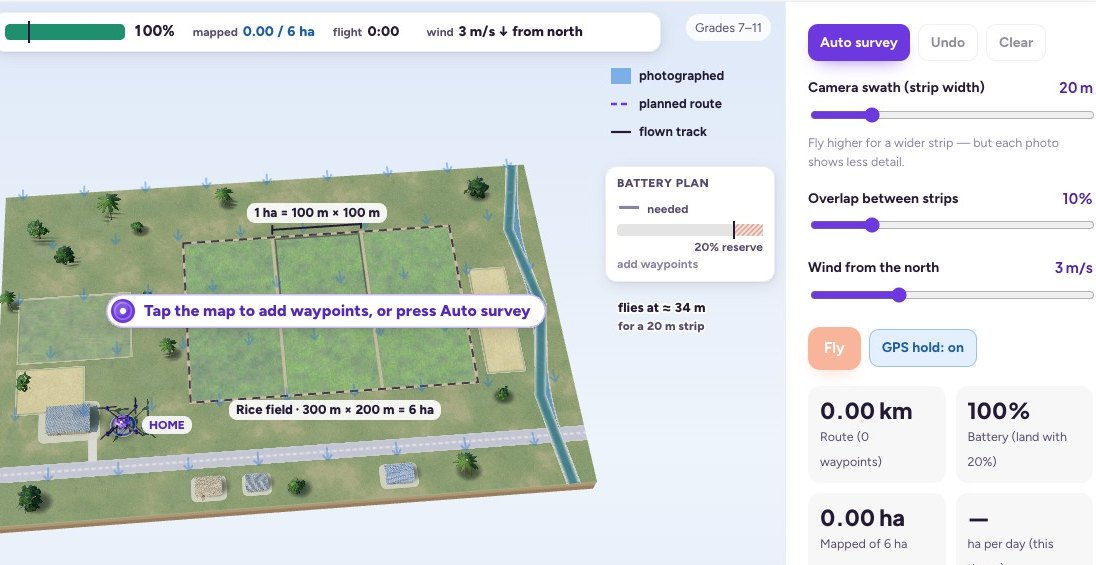
Waypoint mission
Flying without the sticks
Grades 7–8 · Grades 9–11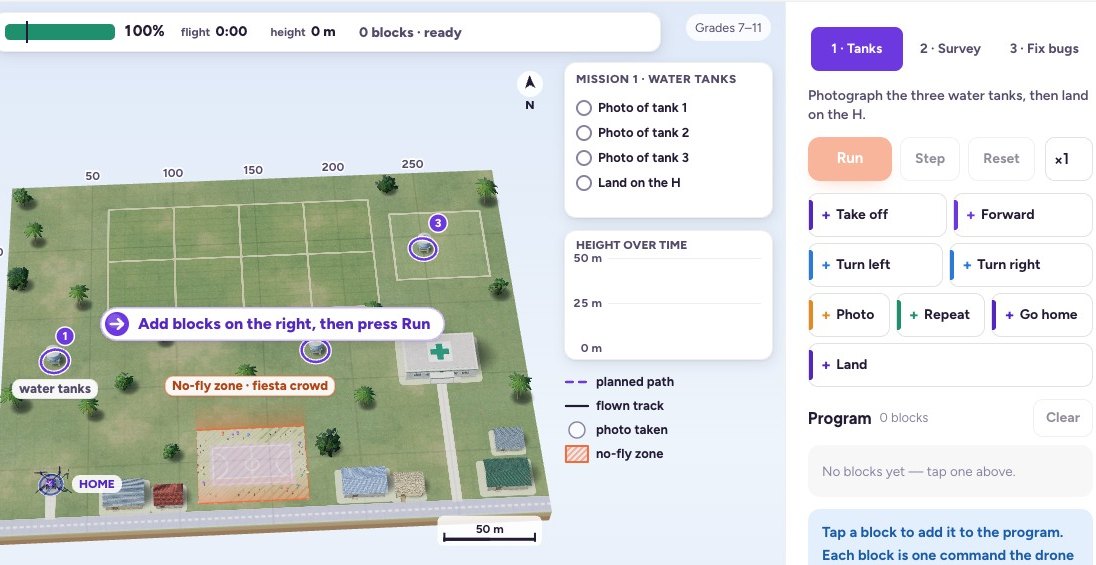
Program the mission
Commands, loops and bugs
Grades 7–8 · Grades 9–11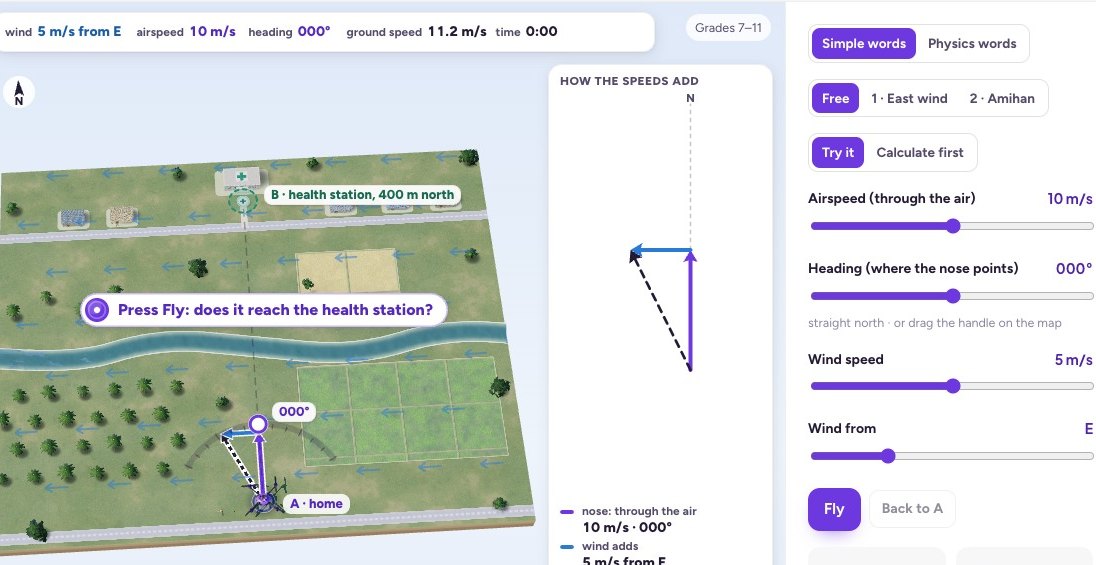
Fly straight in a crosswind
Adding velocity vectors
Grades 7–8 · Grades 9–11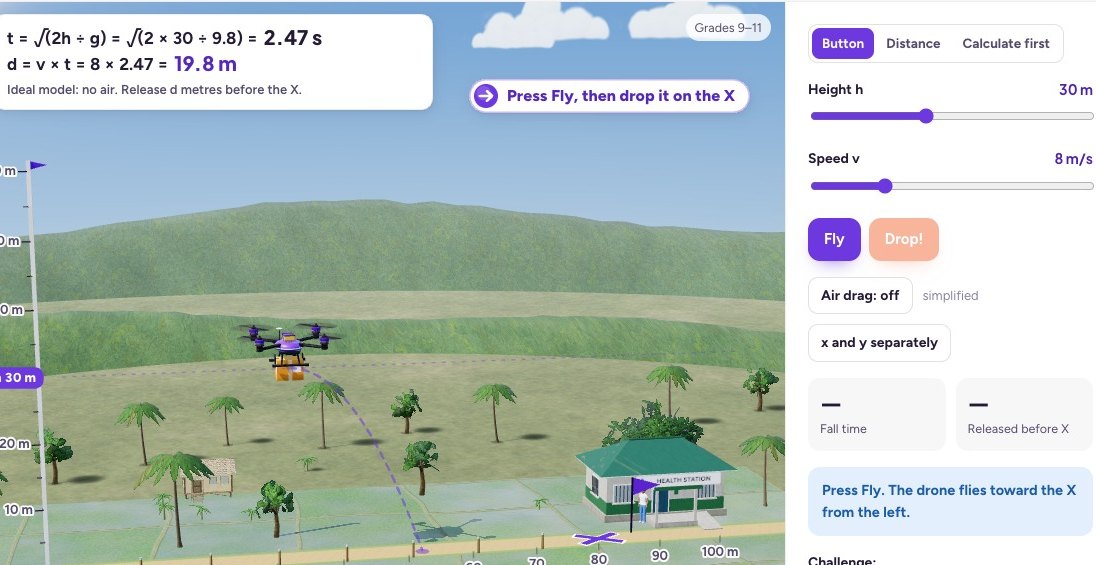
Drop it on the X
Projectile motion
Grades 9–11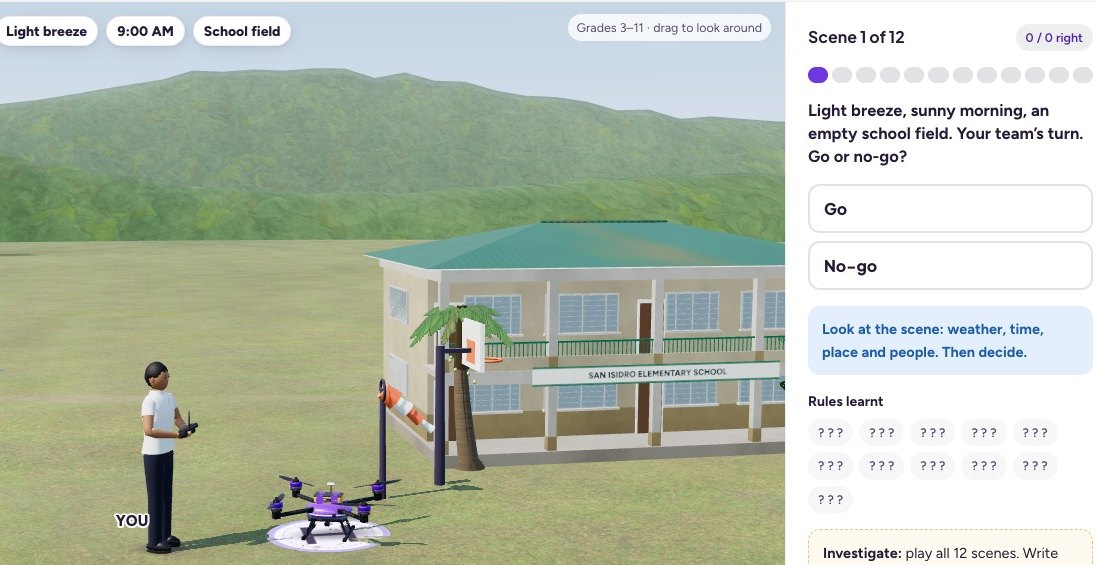
Go or no-go?
Safety and the rules
Grades 3–6 · Grades 7–8 · Grades 9–11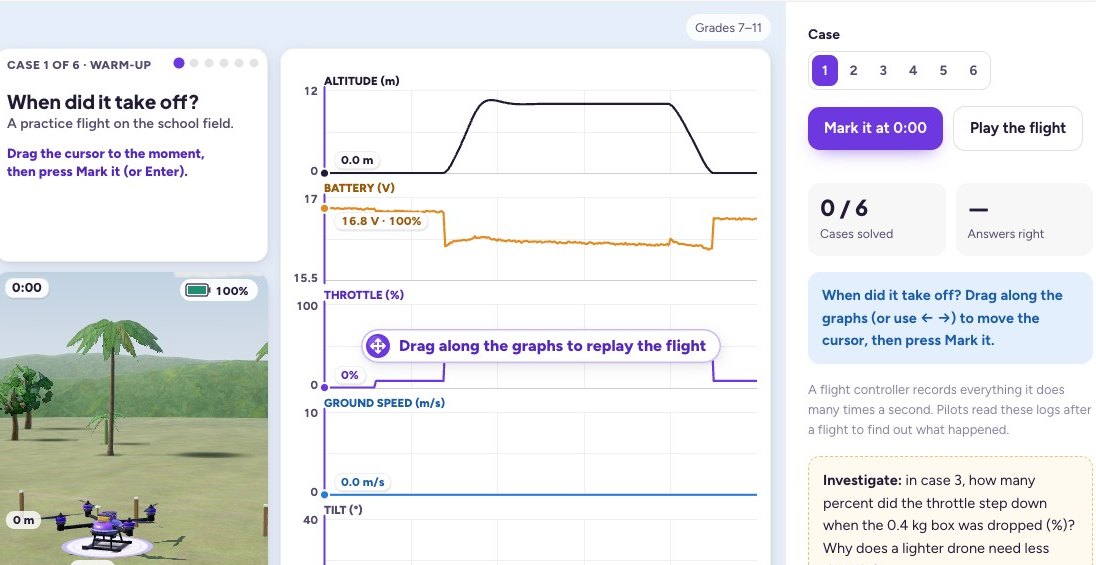
Read the flight log
Graphs as evidence
Grades 7–8 · Grades 9–11Questions about missions and safety
Does an automatic mission remove the need to plan?
No. A programmed flight still needs a suitable route, operating conditions, energy budget and a safe way to finish.
Why inspect a flight log?
A log lets students compare measurements over time and support an explanation with evidence, rather than guessing from one moment of the flight.
How teachers use the labs
Start with the public explanation and ask students to predict what will happen. Compare the preview with that prediction, then sign in to change the controls or run a program. Ask pairs to record one change and explain its effect using the science or programming concept on the page.
Run them with a class
Read the grade bands and teaching connections, choose one activity, and share its preview with students. The description is public; opening the interactive activity requires a free account.