Explore the science
Batteries and motors
Volts, watt-hours, KV and flight time
Electrical energy reaches the air through a chain: battery, electrical control, motor and propeller. This topic separates the quantities used to describe each part, then brings them together in a flight-time prediction. Start by writing the units beside every value. Volts, amp-hours, watt-hours, watts and revolutions per minute answer different questions, even when they appear beside one another on a component label.
Battery builder makes the difference between series and parallel connections visible. Series cells add voltage. Parallel strings add capacity. Stored energy depends on both voltage and capacity, so comparing only the largest mAh number can give the wrong conclusion. The lab uses nominal cell voltage and an explicit mass estimate. Those assumptions should travel with any calculation students make from the activity.
How long will it fly? connects stored energy with the rate of energy use. Dividing watt-hours by watts gives hours; the activity then reserves part of the battery for landing. Students can compare a calm flight with a higher-load case and read the difference on a battery graph. The realistic setting adds the mass of a larger battery to the aircraft, showing why added energy and added weight need to be considered together.
Motor KV introduces a speed constant rather than a general score for motor quality. Multiplying KV by voltage estimates no-load RPM in this model. A propeller adds load, changes the operating speed and raises current demand. The side-by-side stations encourage students to compare current and thrust as well as RPM. A motor spinning quickly without a propeller provides a useful counterexample to the idea that speed alone means useful lifting force.
Inside a motor looks more closely at the interaction of coils, magnets and electrical switching. Connect that internal explanation with the system-level measurements from the other activities. A good classroom investigation changes one component or control at a time and records the effect on several outputs. End by asking students to justify a matched combination for a particular job. A larger battery, a faster motor or a bigger propeller is not automatically a better design; the components must work together within the model limits.
Batteries and motors
Volts, watt-hours, KV and flight time
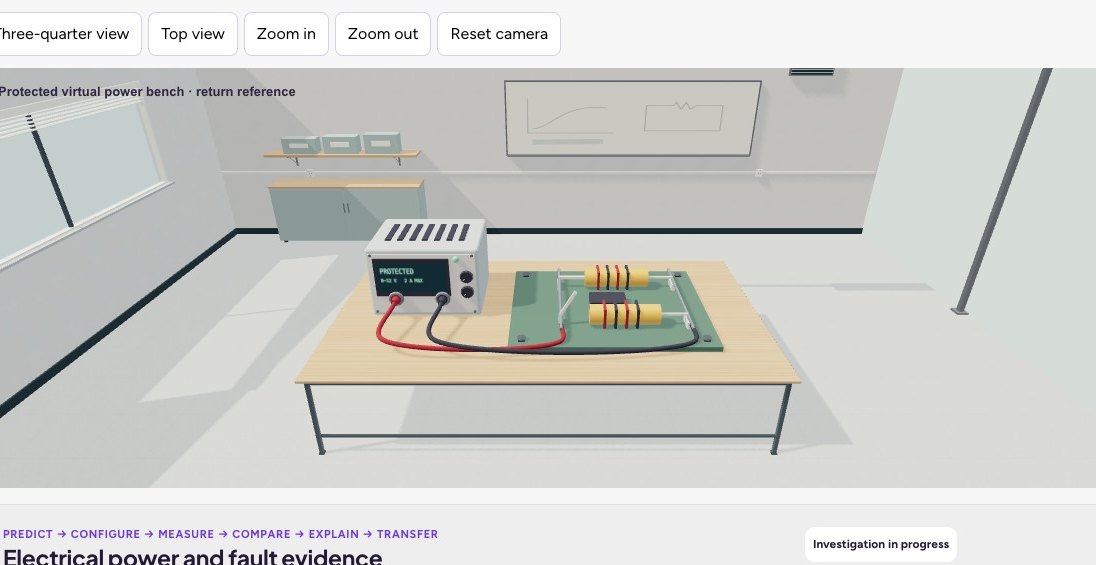
Electrical power and fault evidence
Current, voltage, power and protected fault diagnosis
Grades 7–8 · Grades 9–11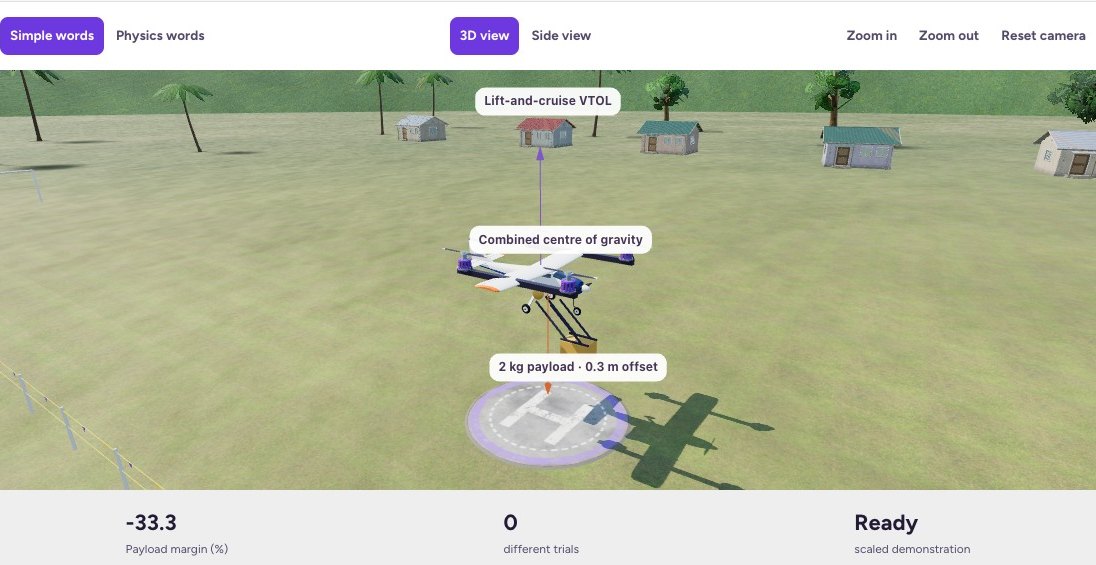
Can this aircraft carry the load?
Weight, balance and power margin
Grades 3–6 · Grades 7–8 · Grades 9–11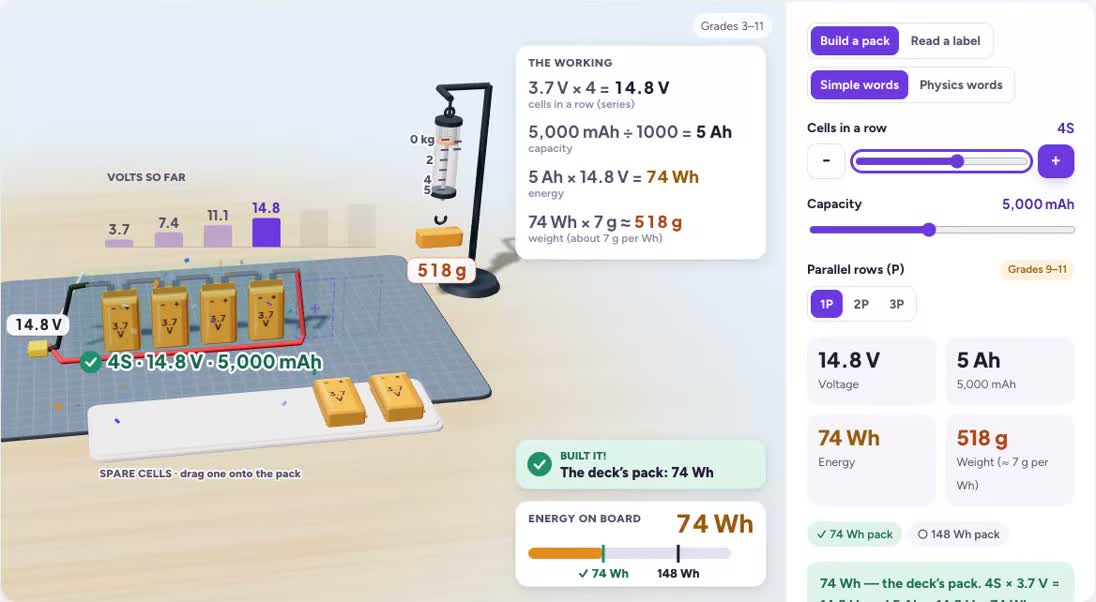
Battery builder
Cells, volts and watt-hours
Grades 3–6 · Grades 7–8 · Grades 9–11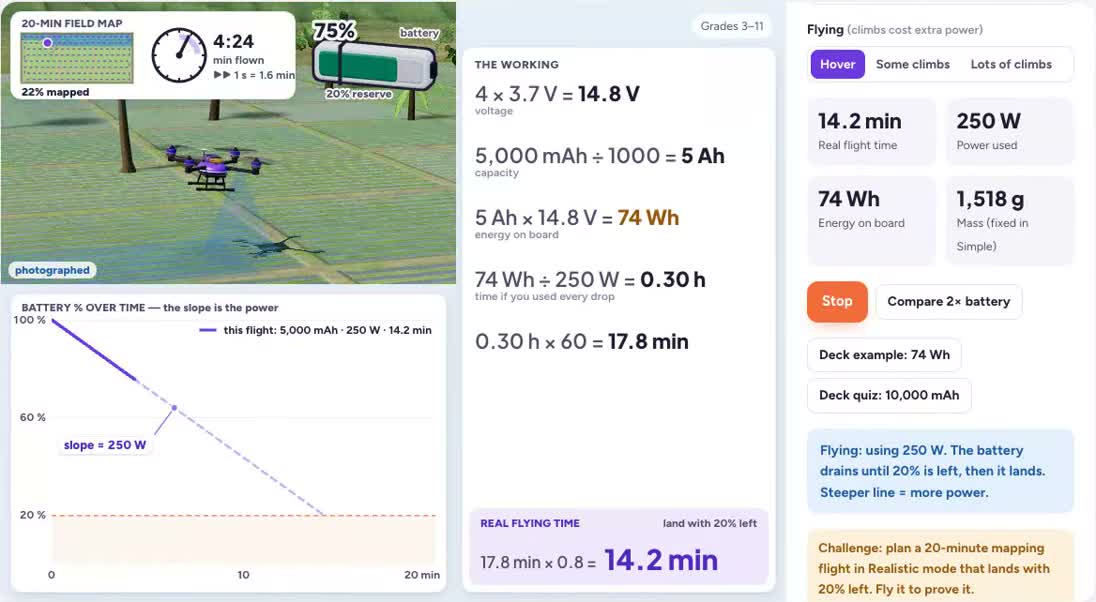
How long will it fly?
Wh ÷ W × 0.8
Grades 3–6 · Grades 7–8 · Grades 9–11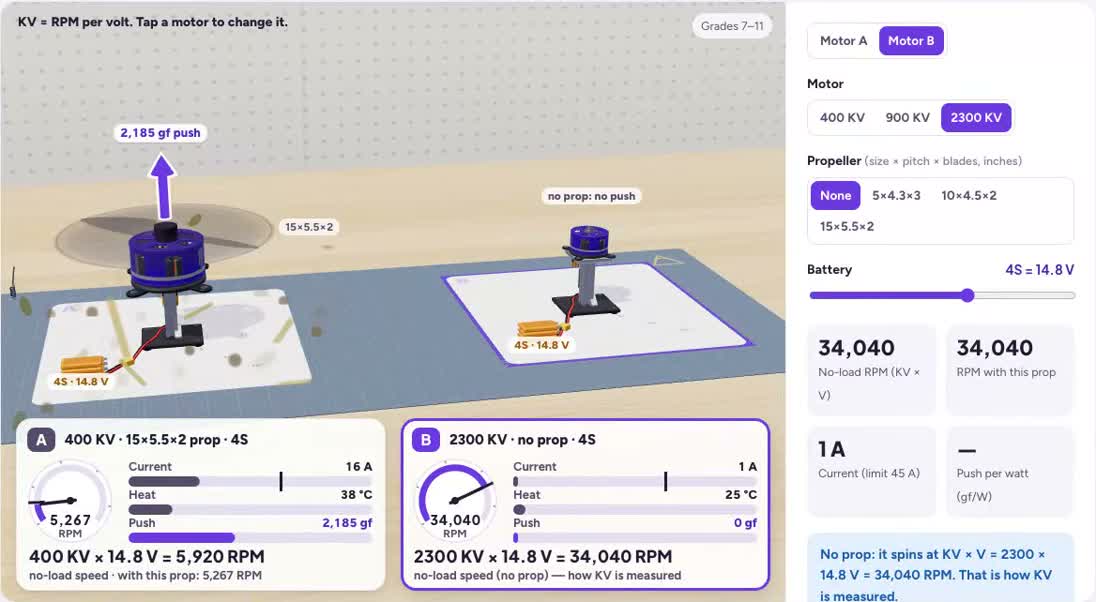
Motor KV
RPM per volt
Grades 7–8 · Grades 9–11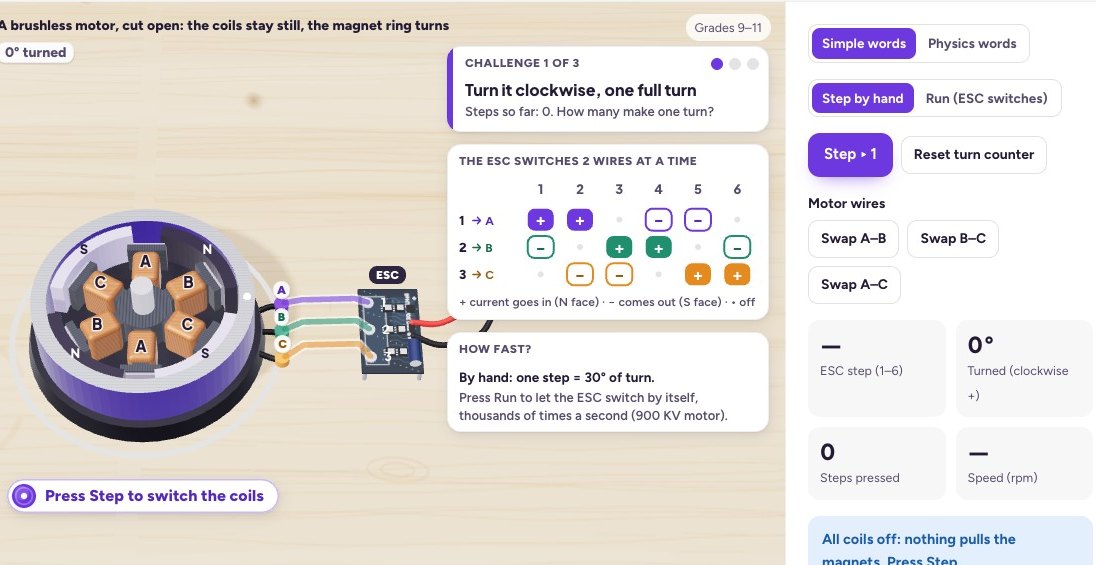
Inside a motor
Coils, magnets and switching
Grades 9–11Questions about batteries and motors
Are watts and watt-hours interchangeable?
No. Watts describe power, the rate of energy use. Watt-hours describe an amount of energy.
Does a higher KV motor always lift more?
No. KV is a speed constant. Thrust also depends on the propeller, voltage and operating load. Compare the whole combination.
How teachers use the labs
Start with the public explanation and ask students to predict what will happen. Compare the preview with that prediction, then sign in to change the controls or run a program. Ask pairs to record one change and explain its effect using the science or programming concept on the page.
Run them with a class
Read the grade bands and teaching connections, choose one activity, and share its preview with students. The description is public; opening the interactive activity requires a free account.