Explore the science
How planes fly
Wings, control surfaces and fixed-wing drones
A fixed-wing aircraft uses airflow over its wings to generate lift. Its motor helps it maintain or change motion, but the relationship between power, speed and height is different from a hovering multirotor. Begin with the aircraft parts, then follow the sequence through lift, control, balance and flight. The activities include both RC aircraft and larger aircraft models so students can compare a shared principle across different designs.
Parts of a plane gives names and purposes to the wing, tail and control surfaces. A useful follow-up asks students to predict the motion before moving a surface. The aircraft response involves forces and turning effects, not simply the direction a piece of the model appears to point. Keep the vocabulary connected to observations so a correctly named surface also has an understood job.
Lift depends on the airflow and the wing state. Angle of attack is the angle between the wing reference and the oncoming airflow; it is not simply the angle of the nose above the horizon. A stall concerns airflow and lift at too great an angle of attack. Students should therefore look at the airspeed and angle information together, rather than treating one low-speed number as a complete explanation of every stall.
Turning adds a force-direction problem. Banking tilts the lift force, creating a component that turns the aircraft. Maintaining height also requires enough vertical support. Compare a gentle turn with a steeper one and observe both the path and the aircraft state. Balance a glider then introduces the centre of gravity and tail setting. A change in balance can change the response even when the launch looks similar.
The glide, take-off and landing activities connect those ideas to complete phases of flight. A gliding aircraft trades height for the energy needed to keep moving against drag. A powered take-off needs a suitable airflow and enough room to reach it. Landing requires managing the approach and the final reduction in descent. Ask students to state what they will measure before each attempt, and to distinguish an observation from an explanation. Finish by comparing a winged drone with a multirotor for a particular task: efficiency over distance and the ability to hold position are different advantages.
How planes fly
Wings, control surfaces and fixed-wing drones
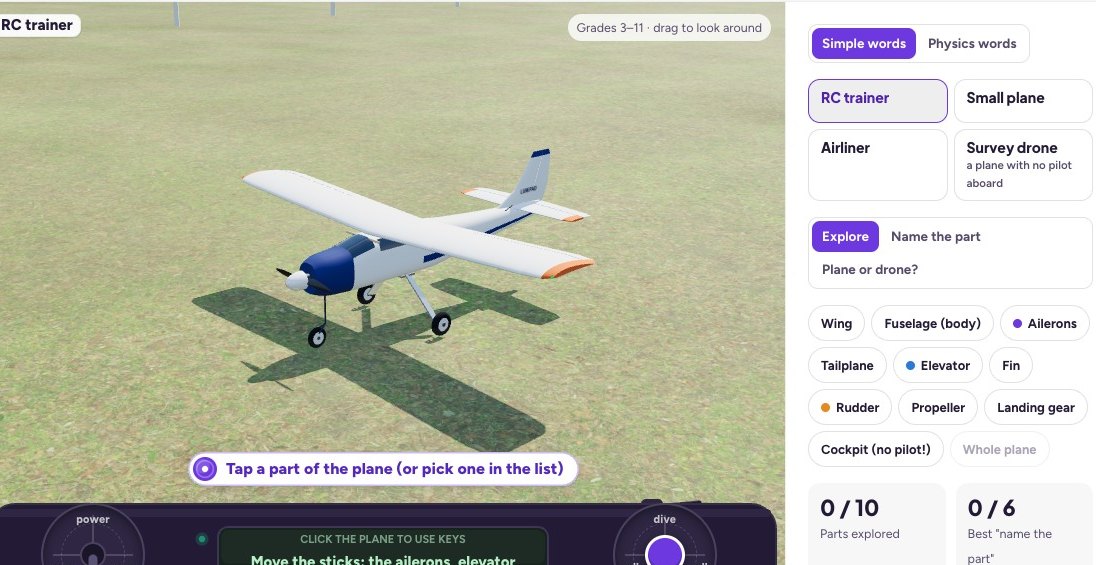
Parts of a plane
Wing, tail, ailerons, flaps
Grades 3–6 · Grades 7–8 · Grades 9–11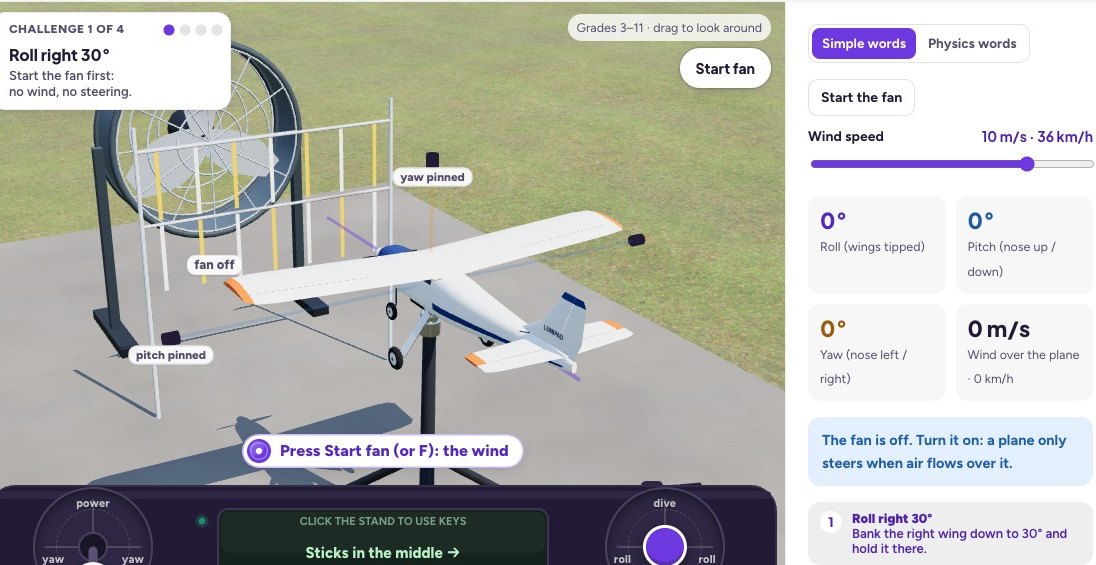
Ailerons, elevator, rudder
How a plane steers
Grades 3–6 · Grades 7–8 · Grades 9–11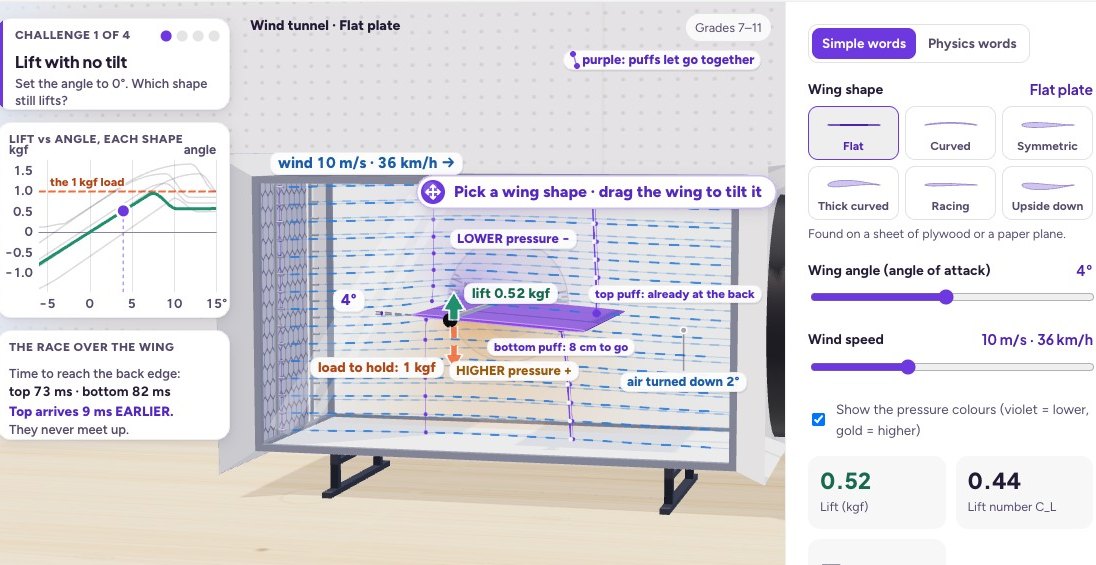
Shape of a wing
Turning the air down
Grades 7–8 · Grades 9–11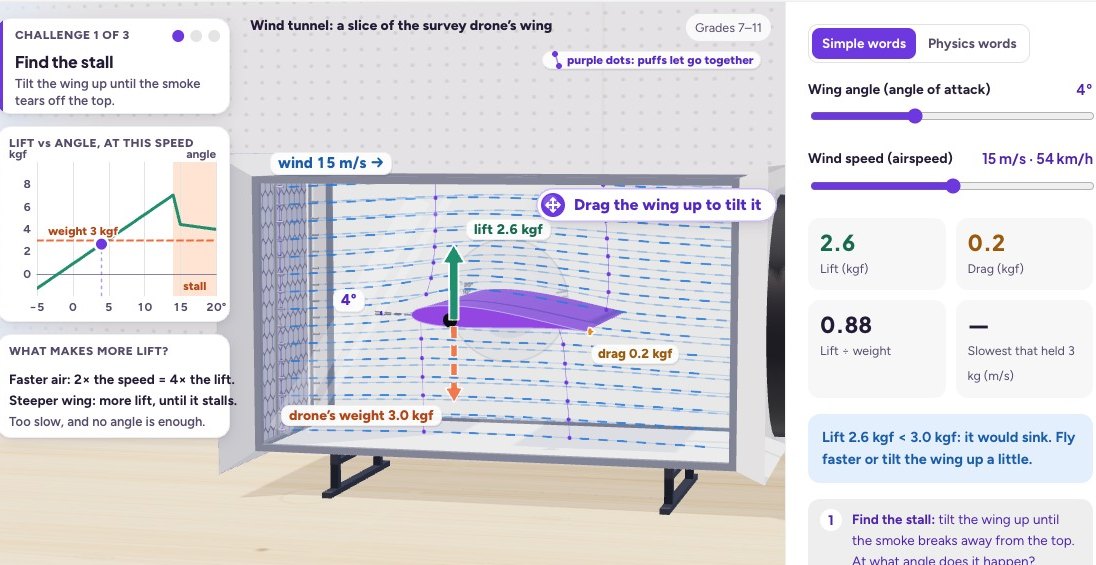
How a wing makes lift
Angle of attack and stall
Grades 7–8 · Grades 9–11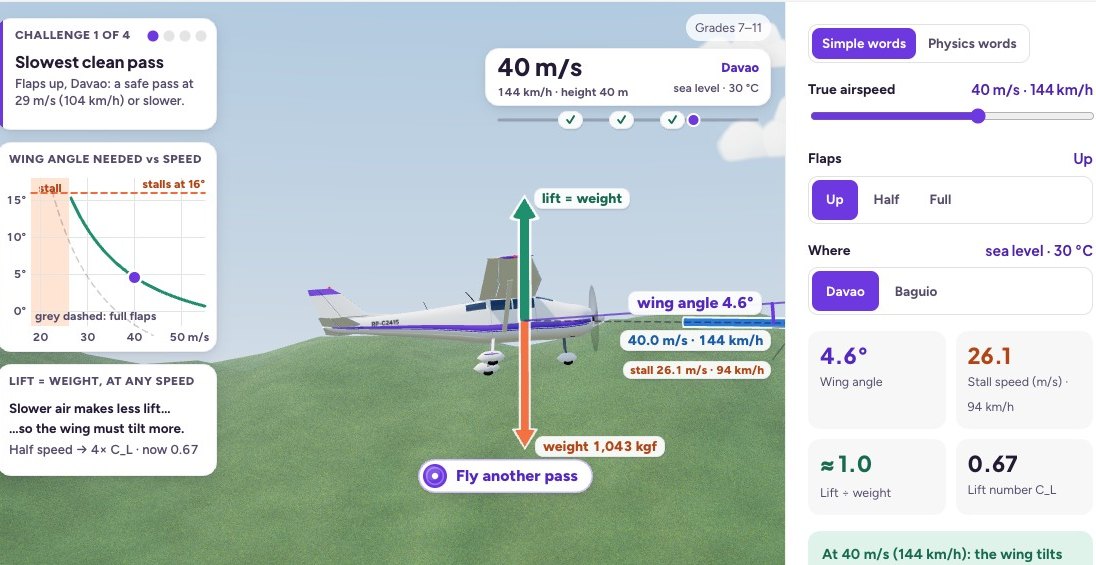
Too slow to fly?
Speed, wing angle and stall
Grades 7–8 · Grades 9–11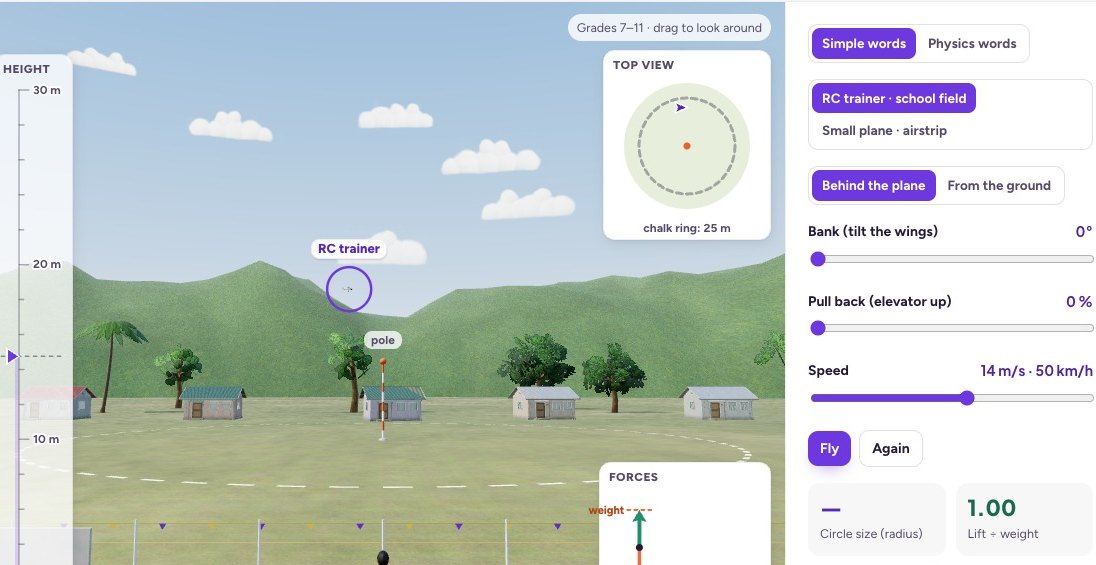
Bank to turn
Tilting the lift
Grades 7–8 · Grades 9–11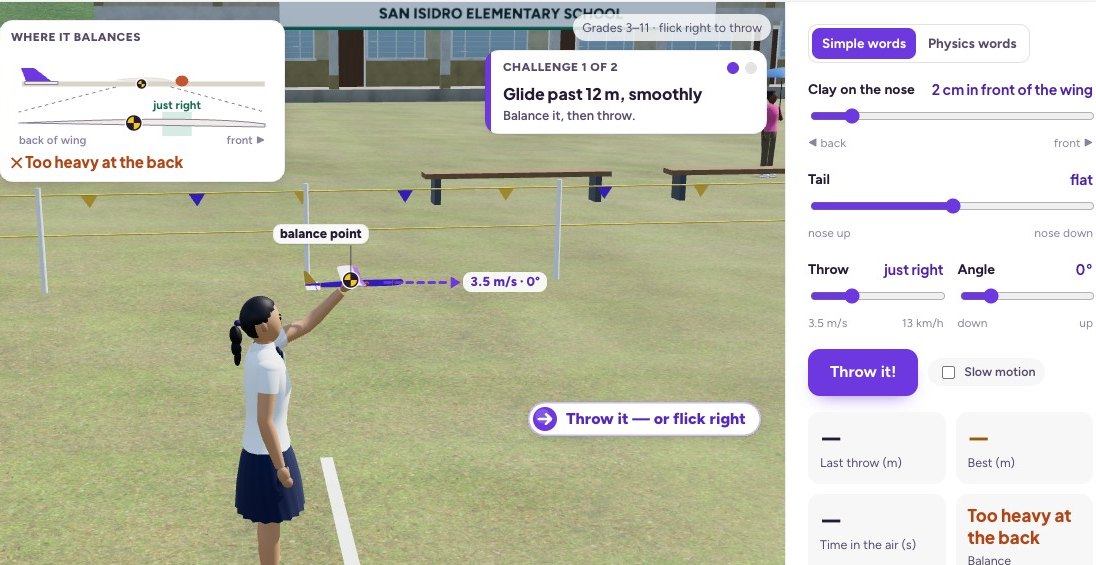
Balance a glider
Centre of gravity
Grades 3–6 · Grades 7–8 · Grades 9–11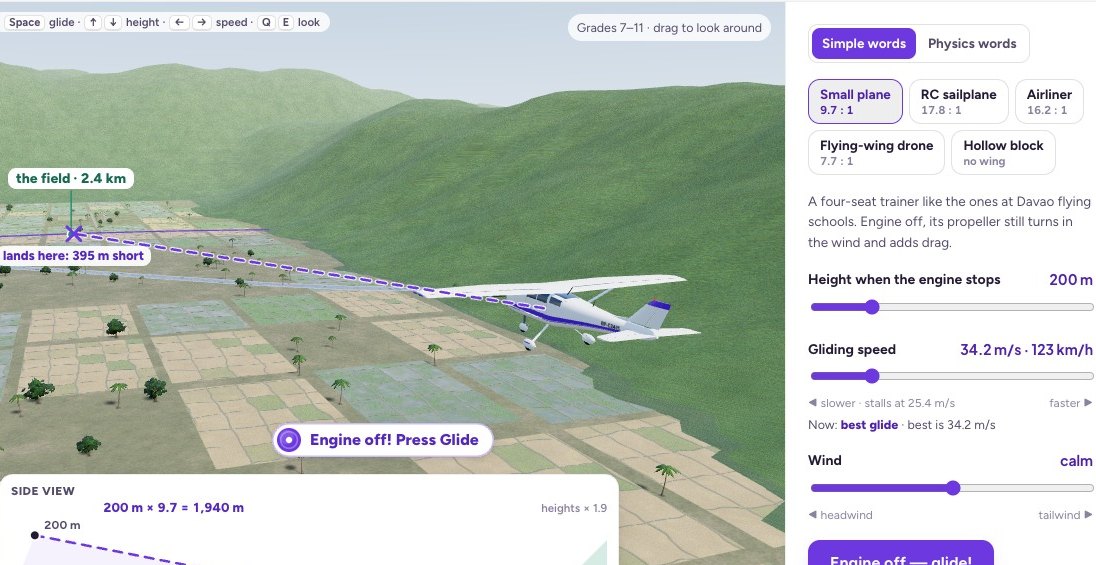
How far will it glide?
Glide ratio = distance ÷ height
Grades 7–8 · Grades 9–11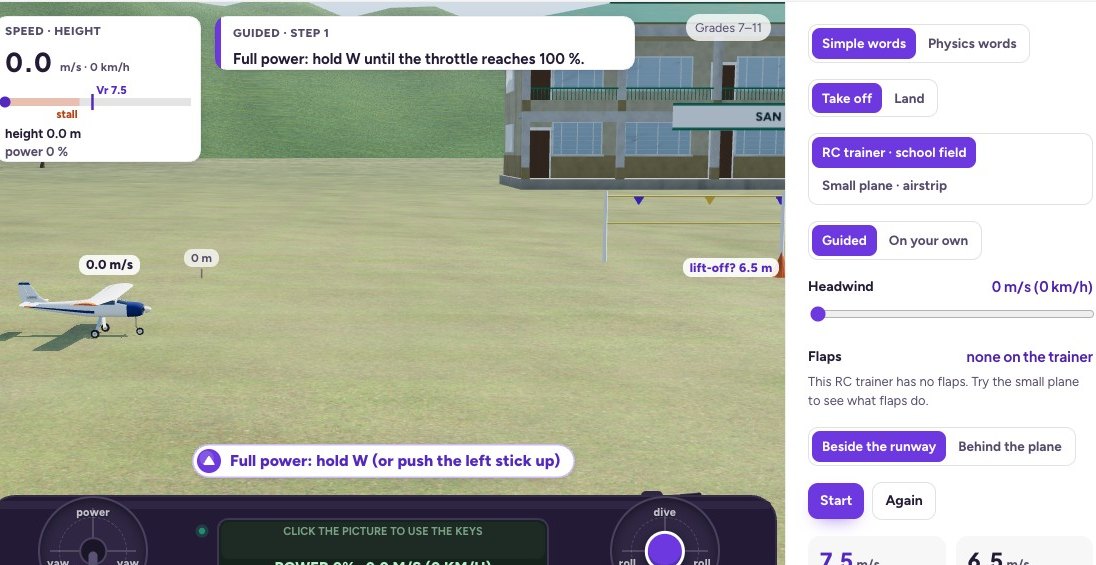
Take off and land
Rotate, climb, flare
Grades 7–8 · Grades 9–11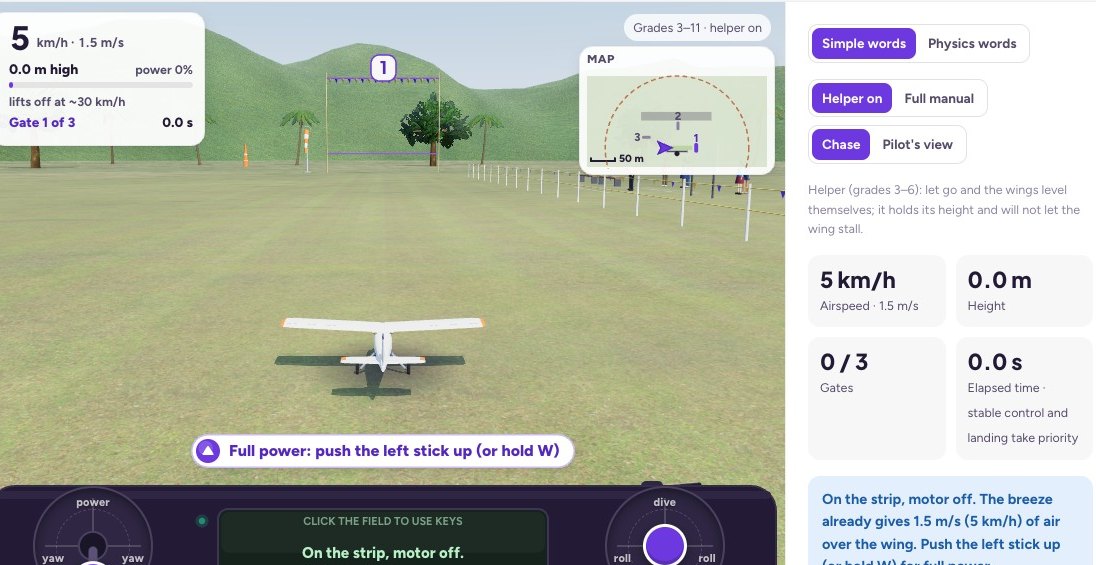
Fly an RC plane
Four channels, no hovering
Grades 3–6 · Grades 7–8 · Grades 9–11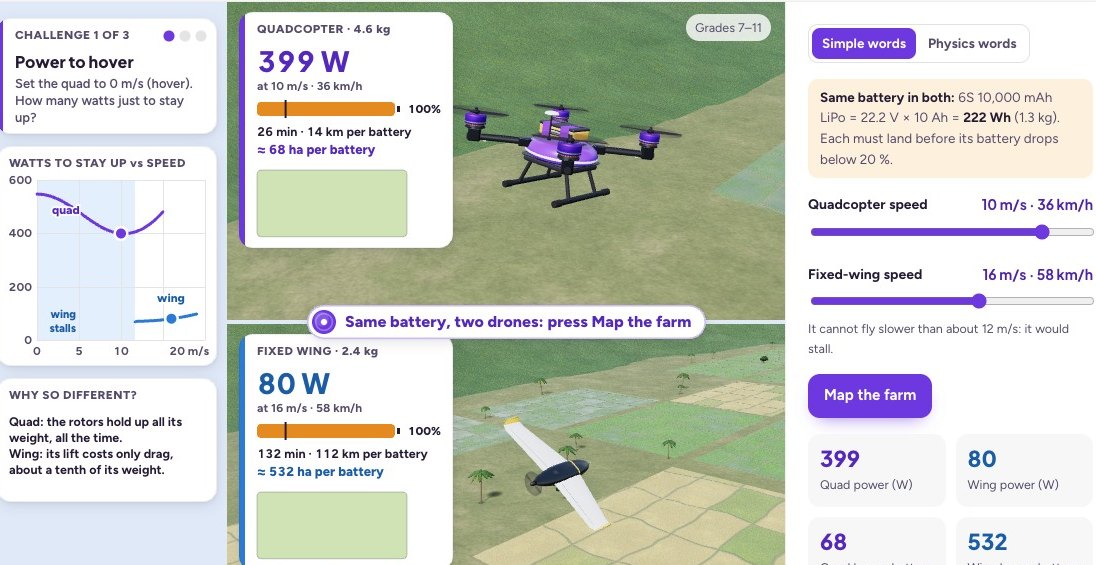
Wing or rotors?
Why mapping drones have wings
Grades 7–8 · Grades 9–11Questions about how planes fly
Can a plane glide without engine power?
Yes. In a glide it loses height while continuing to move through the air. The useful distance depends on the aircraft and flight conditions.
Is angle of attack just the angle of the nose to the horizon?
No. It is measured relative to the oncoming airflow. The airflow direction matters as well as the aircraft attitude.
How teachers use the labs
Start with the public explanation and ask students to predict what will happen. Compare the preview with that prediction, then sign in to change the controls or run a program. Ask pairs to record one change and explain its effect using the science or programming concept on the page.
Run them with a class
Read the grade bands and teaching connections, choose one activity, and share its preview with students. The description is public; opening the interactive activity requires a free account.