Explore the science
How helicopters fly
Collective, cyclic, anti-torque and a steady hover
How helicopters fly
Collective, cyclic, anti-torque and a steady hover
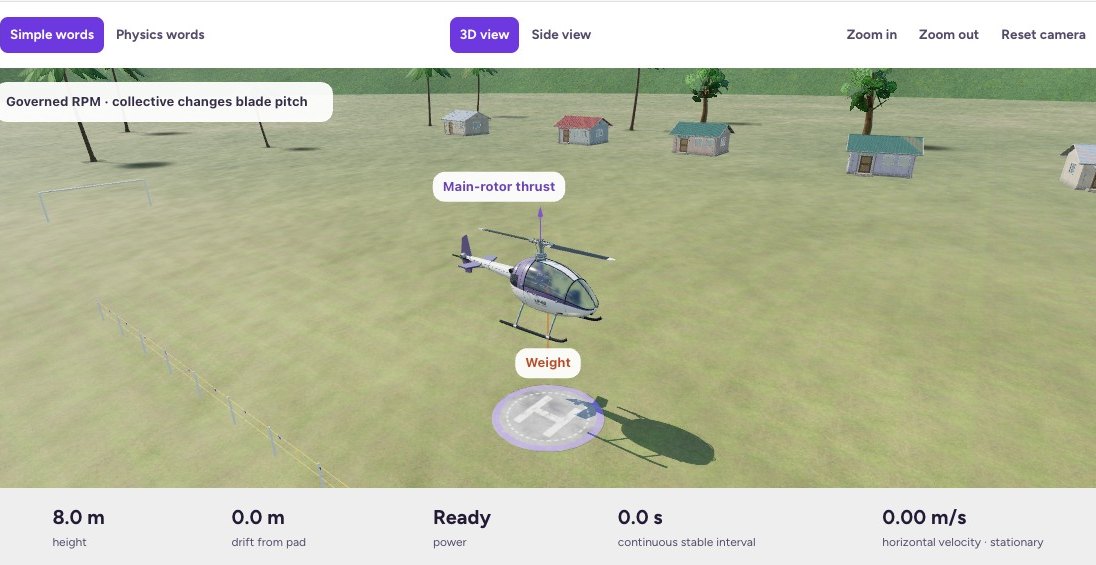
Collective and cyclic
Blade pitch and a tilted rotor disc
Grades 3–6 · Grades 7–8 · Grades 9–11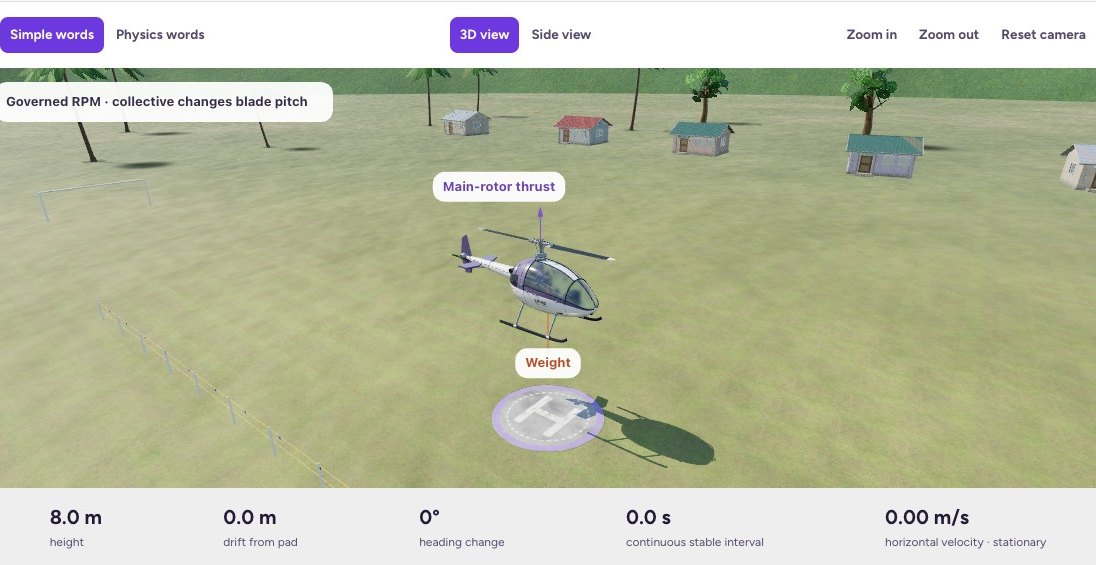
Why a helicopter needs a tail rotor
Equal and opposite torque
Grades 3–6 · Grades 7–8 · Grades 9–11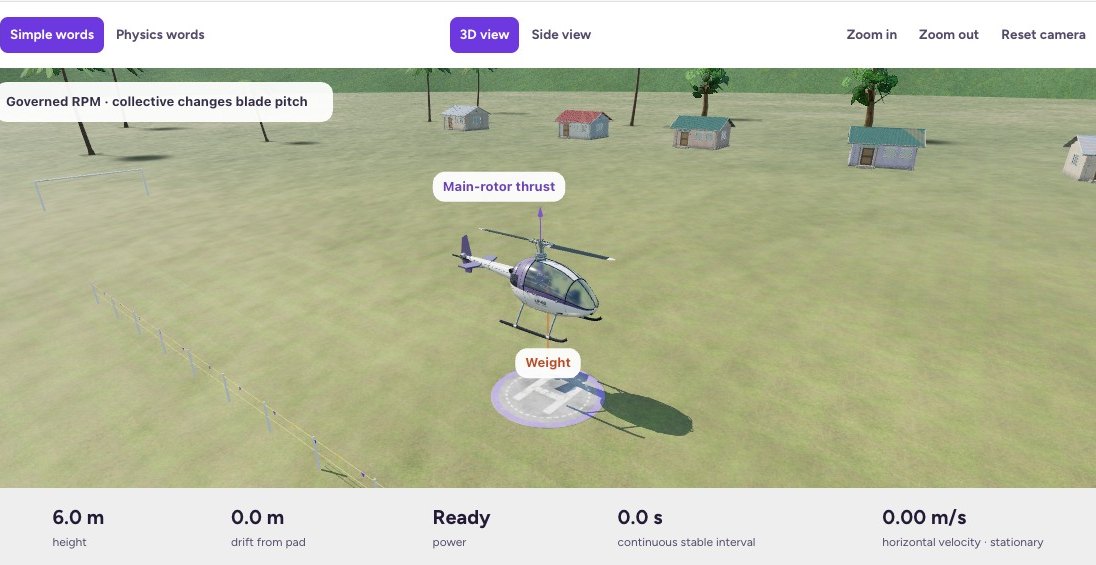
Hold the helicopter over the pad
Small corrections, steady hover
Grades 3–6 · Grades 7–8 · Grades 9–11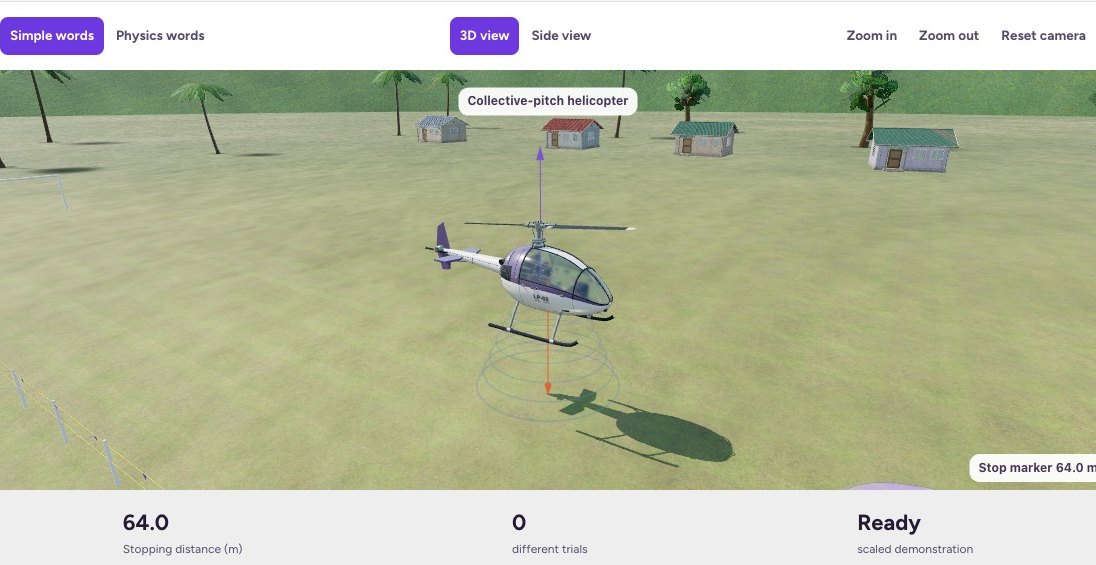
From hover to a precise approach
Momentum and stopping distance
Grades 3–6 · Grades 7–8 · Grades 9–11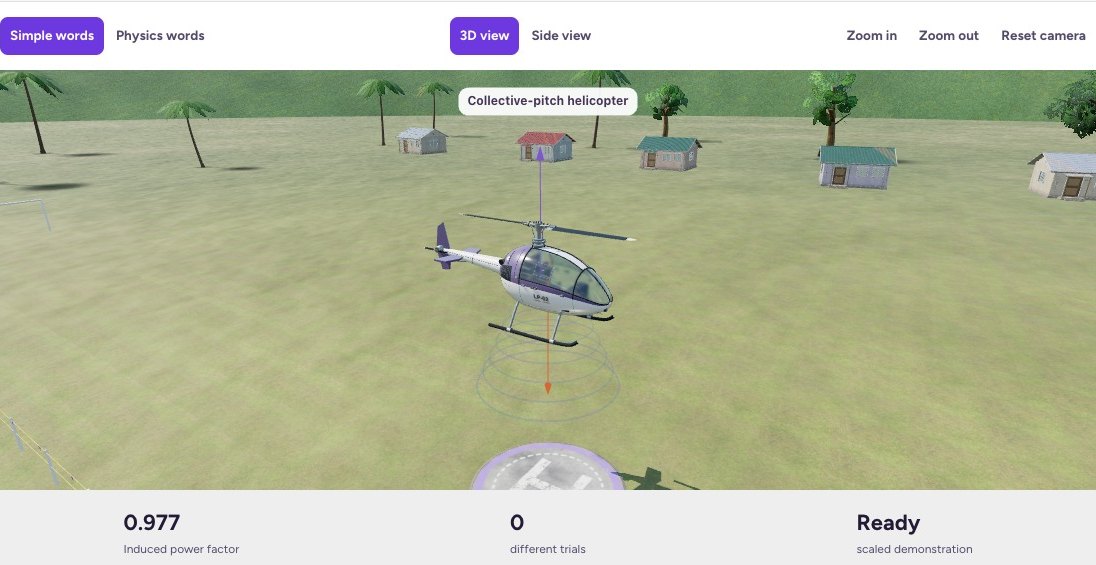
Hover near and away from the ground
Rotor height and induced power
Grades 3–6 · Grades 7–8 · Grades 9–11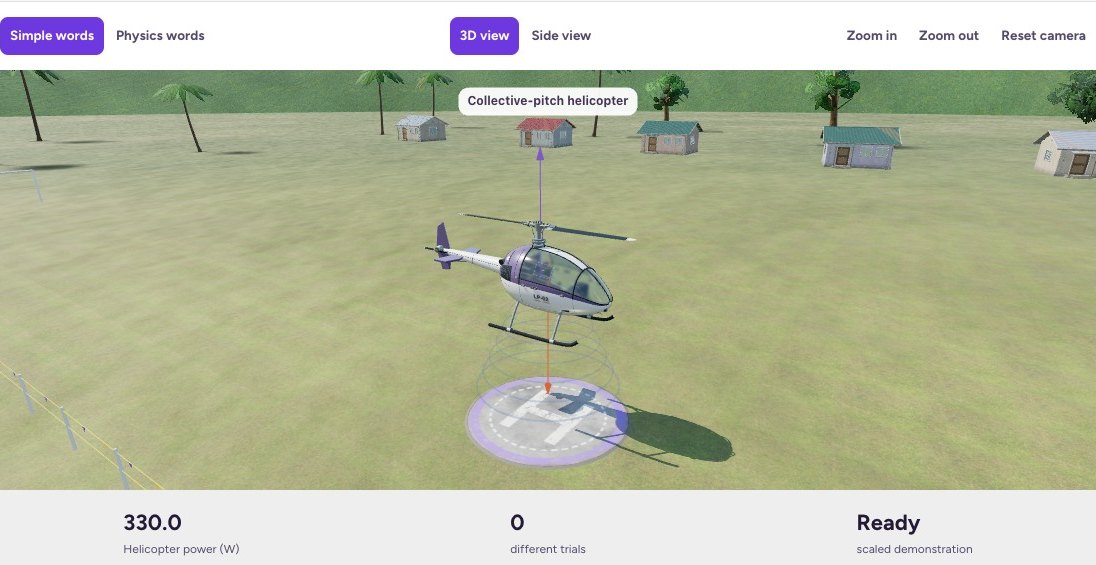
Find the economical helicopter speed
Induced power versus drag
Grades 3–6 · Grades 7–8 · Grades 9–11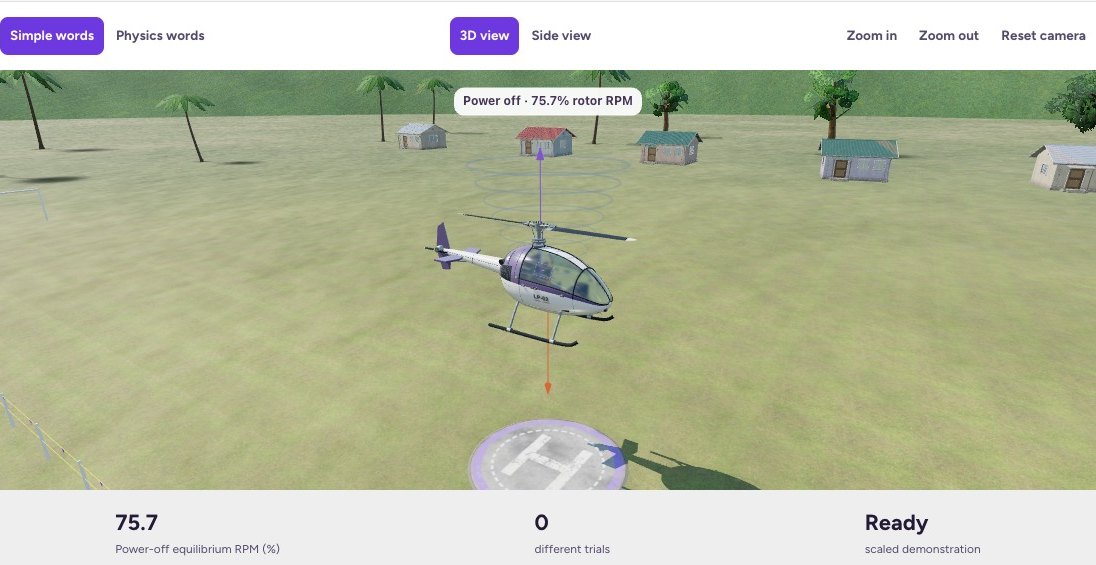
Where does rotor energy come from?
Power-off airflow and rotor RPM
Grades 9–11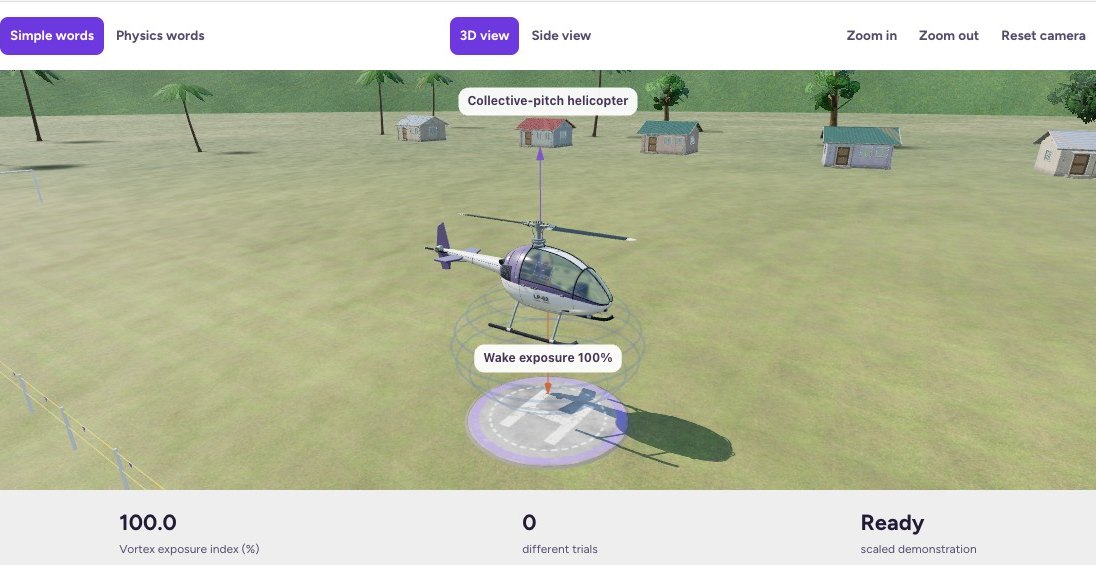
Explore powered-descent airflow
Vortex-ring exposure
Grades 9–11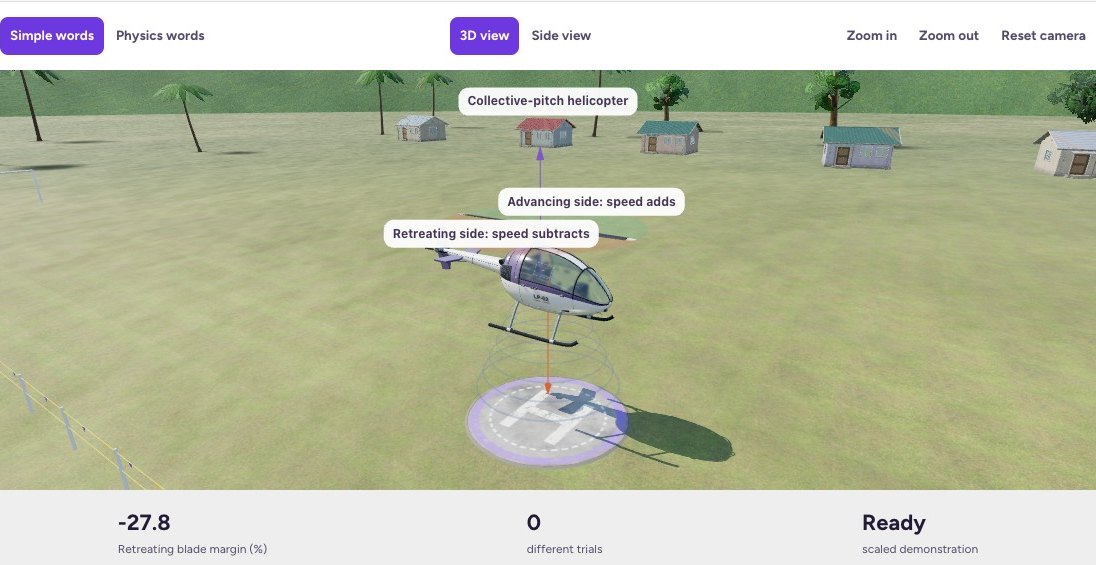
Why helicopter speed has limits
Advancing and retreating blades
Grades 9–11How teachers use the labs
Start with the public explanation and ask students to predict what will happen. Compare the preview with that prediction, then sign in to change the controls or run a program. Ask pairs to record one change and explain its effect using the science or programming concept on the page.
Run them with a class
Read the grade bands and teaching connections, choose one activity, and share its preview with students. The description is public; opening the interactive activity requires a free account.